
Accessible Seville Travel Guide
A realistic, affectionate guide to seeing Seville with limited mobility, a wheelchair or a slower pace — which monuments roll well, where the cobbles bite, how the taxis and tram help, and how to build heat breaks into a day so the city stays a pleasure rather than a battle.

Photo: Tânia Mousinho / Unsplash
- ✓Seville's flat terrain is a gift: the historic centre is almost entirely level, so distance and surface — not hills — are the real planning factors.
- ✓The big monuments are largely accessible — the Real Alcázar, the Cathedral and Plaza de España all admit wheelchair users, usually with reduced or free entry for a companion (verify current policy when booking).
- ✓Cobblestones and narrow lanes in Santa Cruz are the genuine obstacle; the wider avenues, the river path and María Luisa Park roll far more smoothly.
- ✓Heat is an accessibility issue here. From June to September, sightseeing belongs to the morning and evening, with a long, shaded rest through the afternoon.
- ✓Eusko-style accessible taxis exist but are limited in number — book ahead — while Line 1 of the Metro and the centre tram are step-free and a real help.
Is Seville an accessible city?
Seville is kinder to slower travellers than its tangled medieval map suggests, and the single biggest reason is geography: the city is almost completely flat. There are no Andalusian hill-town staircases to defeat you here, no funiculars to negotiate, no streets that climb away from the river. Once you accept that the challenges are surface, width and heat rather than gradient, the city opens up — and a great deal of the very best of Seville, from the Alcázar gardens to a slow evening along the Guadalquivir, is reachable at a gentle, sit-down-often pace.
What you trade for that flatness is the old town's texture. The lanes of Barrio Santa Cruz and parts of Triana are cobbled, uneven and sometimes barely wider than a doorway, with high kerbs and the odd step into a bar. The grand set-pieces, by contrast, were built to impress and tend to be generous with space and ramps. So the honest picture is a city of two surfaces — polished avenues and rough warrens — and a good accessible day is mostly about choosing the smooth thread through it. That is exactly what this guide, and our companion accessible itinerary, are built to help you do.
At a glance
A quick orientation before the detail — treat the timings and policies as evergreen guidance and verify anything ticketed or volatile when you book, as opening hours and concession rules change.
- Terrain — flat throughout the centre; the obstacle is cobbles and narrow lanes, not hills.
- Smoothest zones — Avenida de la Constitución, the riverside path, María Luisa Park, Plaza de España, the Setas area.
- Roughest zones — inner Santa Cruz, parts of old Triana, some market lanes; uneven, narrow, occasional steps.
- Monuments — Alcázar, Cathedral and Plaza de España all have accessible routes; companion entry is often reduced or free (verify).
- Transport — centre tram (MetroCentro) and Metro Line 1 are step-free; accessible taxis exist but are few, so pre-book.
- Toilets — accessible WCs at major monuments, museums and large cafés; carry a small fee in coins for some public facilities.
- Heat — plan monuments for before noon and after the early evening; rest in shade through the afternoon.
- Useful card — EU Disability Card / national concession proof is worth carrying for reduced or free admissions.
Which monuments roll well — and which fight back?
The headline trio behaves well. The Real Alcázar has a designated accessible route through the palace and into the gardens; not every historic threshold or upper room is reachable, but the great courtyards, the Salón de Embajadores and a good sweep of the gardens are, and wheelchair users plus a companion typically pay a reduced or waived fare — confirm the current concession when you reserve a timed slot. The Cathedral is broadly step-free across its vast floor, with a ramp access and accessible WC; the Giralda, however, is a long ramped climb built for horses, which some find manageable at a slow pace and others find too much, so judge it on the day. Plaza de España is flat, open and one of the most rewarding accessible stops in the city, with a level apron around the half-moon and ramps to the bridges.
Beyond the big three, results vary. The Setas de Sevilla (Las Setas) has a lift to its walkway, giving an accessible rooftop panorama that is otherwise rare in the old town. María Luisa Park is largely flat with broad, mostly firm paths — gravel in places, so a powered chair or a strong pusher helps. The harder targets are the intimate ones: tucked-away churches with a step at the door, the deepest Santa Cruz lanes, and small tapas bars where the bar is high and the room is tight. None of this should stop you — it just means choosing the generous spaces for the centrepieces and treating the warrens as something to sample at the edges rather than push deep into.
- Real Alcázar — accessible palace route and gardens; companion fare usually reduced/free (verify).
- Cathedral — step-free main floor with ramp and accessible WC; the Giralda is a long ramped climb, judge on the day.
- Plaza de España — flat, open, ramped bridges; one of the best accessible sights in Seville.
- Las Setas — lift to the rooftop walkway for an accessible panorama.
- María Luisa Park — broad, mostly level paths, some gravel.
How bad are the cobblestones, really?
Honestly assessed, Seville's cobbles range from a mild rumble to a genuine jolt, and they cluster exactly where the tourist romance is thickest — the lanes of Santa Cruz, the older corners of Triana, a few market streets. The stones can be rounded and proud of their mortar, the camber awkward, and the kerbs high with dropped crossings that don't always line up. For a manual wheelchair user travelling solo this is the part of Seville that demands the most patience; for a powered chair the vibration is the issue; and for anyone walking slowly with a stick or a frame, the uneven footing is worth taking seriously, especially when the stones are wet and slick.
The good news is that you can route around almost all of it. The spine of the centre — Avenida de la Constitución past the Cathedral, the broad pedestrian streets toward the Setas, the riverside promenade from the Torre del Oro — is smooth, level and shaded in stretches. Cross into Santa Cruz only as far as comfort allows, savour a plaza or two, and retreat to the easy avenues rather than committing to the deepest lanes. A useful trick is to admire the picturesque warrens in the cool of early morning when they're quiet and you can pick your line, then spend the busier hours on the wide, predictable routes.
How do I get around — taxis, tram and Metro?
For point-to-point comfort, taxis are the workhorse, and Seville's flat compactness means most journeys are short. The city does run accessible taxis (eusko-style adapted vehicles with ramps), but they are a small slice of the fleet, so the reliable move is to pre-book one by phone or app rather than hope to flag one down — build in extra time at peak periods and during festival weeks. Standard taxis can carry a folding chair in the boot and are easy to find at ranks by Santa Justa, the Cathedral and the main squares.
Public transport helps more than first-timers expect. The MetroCentro tram glides level through the heart of the centre along Avenida de la Constitución and is step-free at platform height — an easy, scenic way to cover the main axis. Metro Line 1, which loops out to the suburbs and across the river, is fully step-free with lifts at stations and is genuinely useful for longer hops and for reaching some accommodation. City buses are increasingly low-floor with ramps, though the network is denser than it is intuitive. Whatever you use, plan around the heat: a midday transfer in August is far harder than the same trip at nine in the morning.
- Pre-book accessible (adapted) taxis — they exist but are limited; don't rely on hailing one.
- MetroCentro tram is step-free and runs the main central axis — easy and pleasant.
- Metro Line 1 is fully step-free with station lifts; good for longer or cross-river trips.
- Standard taxis are cheap over short distances and will carry a folded chair.
Where can I find toilets and rest stops?
Accessible toilets are reliably found inside the things you'll already be visiting — the major monuments, the larger museums, department stores and big cafés all tend to have an adapted WC, and a paid coffee buys you a clean, air-conditioned pause as much as a drink. Public street toilets are scarcer and more variable, so the practical habit is to use the facilities at each monument as you go rather than wait for a need. Carry a little change, as a few facilities charge a small fee, and don't bank on every small, old tapas bar having an accessible loo — the historic buildings simply weren't designed for it.
Rest stops, happily, are everywhere. Seville is a city of benches, fountains and shaded plazas, and building your day around them is the single most useful thing a slower traveller can do. The orange-tree squares of the centre, the porches of Plaza de España, the benches under the trees in María Luisa Park and the riverside walls all give you somewhere to sit, cool down and watch the city go by. Treat these not as interruptions but as part of the itinerary — the paseo, the slow stroll-and-sit, is how Sevillanos themselves move through the heat.
What about hotels and where to stay?
Position matters more than almost anything for an easy trip. Basing yourself on or near the smooth central spine — around Avenida de la Constitución, the Arenal by the river, or the open streets near the Cathedral — means the flat, predictable routes start at your door and the cobbled warrens are an optional detour rather than a daily gauntlet. Many of Seville's hotels occupy converted historic palaces and townhouses, which are gorgeous but can hide a step at the entrance, a small lift or an awkward old bathroom, so don't assume — ask the specific questions: is the entrance step-free, how wide is the lift and door, is there a roll-in shower or grab rails, and is there an adapted room rather than just a 'large' one.
Larger and newer hotels generally offer the most dependable adapted rooms and level entrances, while the most atmospheric boutique conversions are the ones to interrogate hardest. Booking direct and confirming the details in writing is worth the effort. If you're weighing neighbourhoods for comfort and flatness as much as charm, our where-to-stay guide breaks the central districts down by exactly these practicalities.

How do I handle the heat and pace the day?
In Seville, heat is not a footnote to accessibility — it is central to it. From roughly June into September the city is one of the hottest in Europe, with afternoon highs that regularly sit in the mid-thirties Celsius and can climb higher, and that heat is harder on anyone moving slowly, managing a condition, pushing or being pushed in a chair. The fix is the local rhythm: do your sightseeing in the cool of the morning, retreat for a long, shaded, ideally air-conditioned rest through the worst of the afternoon, and re-emerge for the golden evening when the stones give back their warmth and the city comes alive again.
Practically, that means front-loading the monuments — first slots at the Alcázar and Cathedral are cooler as well as quieter — carrying more water than you think you need, and keeping shade, hats and sun cover non-negotiable from May to October. Even in the kinder shoulder seasons of spring and autumn, the gentlest accessible days are the ones that don't try to do too much: two or three anchored stops with generous sitting time beats a crammed list. Build the rests in deliberately, and Seville rewards a slow traveller as richly as a fast one.
- See monuments before noon and after the early evening; rest, in shade, through the afternoon.
- Carry plenty of water and sun cover from May to October; the heat is an accessibility factor here.
- Spring and autumn are the easiest seasons for pace and comfort.
- Plan two or three anchored stops a day with real sitting time rather than a long list.

Accessible Seville Itinerary
A realistic, romantic accessible route through Seville built on smoother surfaces, level entrances, lifts, taxis and the tram — with honest notes on cobbles, ramps, rest stops and the heat, paced so the city stays a pleasure rather than an obstacle course.
Read guide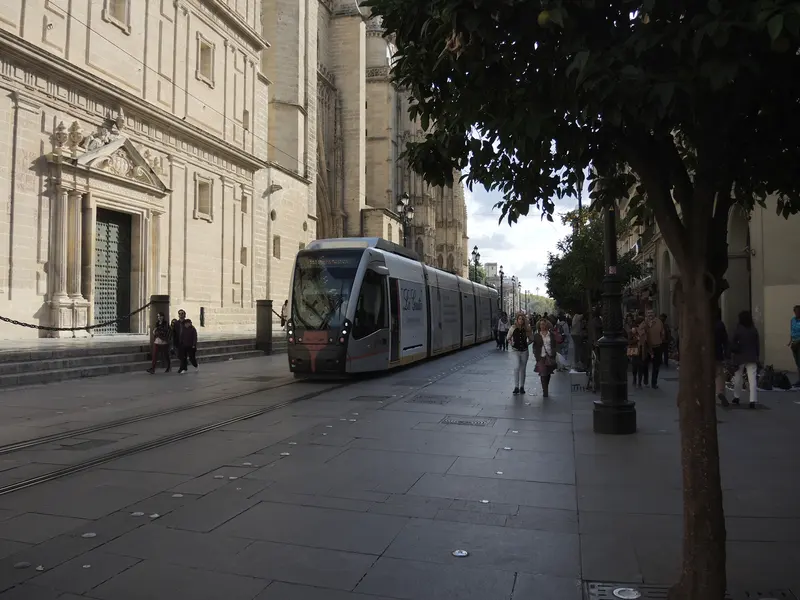
Seville Public Transport Guide
Buses, the tram, the single metro line, the airport bus and taxis explained — how Seville's transport fits together, when each is worth it, and the honest truth that in the old centre you'll mostly just walk.
Read guide
María Luisa Park Guide
Shaded walks, tiled fountains, hidden plazas, picnic stops and museums in María Luisa Park — the green heart of Seville, and the easiest place to escape the heat right beside Plaza de España.
Read guideMore in Travel Tips
6
Best Time to Visit Seville
When to come to Seville, season by season — orange-blossom spring and its great festivals, the fierce but manageable summer, golden autumn culture and quiet, well-priced winter — so you can match the city's mood to your own.
Read guide
Getting Around Seville
When to walk, take a taxi, hop the tram, ride the metro or a city bus, and when to cycle in Seville — with honest notes on the summer heat, the cobblestones and how compact the centre really is.
Read guide
Is Seville Safe?
Practical, honest safety advice for Seville: how the city feels day and night, pickpockets and petty theft in crowds, the very real danger of summer heat, nightlife, solo travellers and the special case of festival days.
Read guide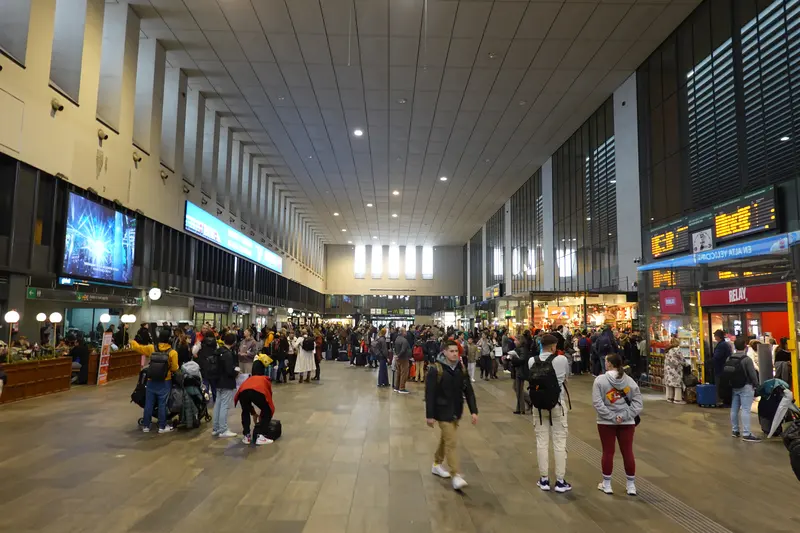
Luggage Storage in Seville
Where to drop your bags in Seville on an awkward in-between day — beside Santa Justa station, around the central sights, before a tour or after check-out — so you can spend your last hours wandering the orange-tree lanes instead of dragging a suitcase over cobbles.
Read guide
Money & Tipping in Seville
How money actually works in Seville: when cards sail through and when you'll want coins, how light and optional tipping really is, the etiquette of paying at a tapas bar, and the small cash realities — markets, taxis, toilets — that catch visitors out.
Read guide
Seville Airport to City Center
The easiest ways from Seville Airport (SVQ) into the city — the airport bus, a fixed-tariff taxi, a pre-booked private transfer or a rental car — with honest notes on cost, comfort and which suits whom.
Read guide