
Real Alcázar of Seville Guide
How to visit Seville's royal palace: what you're seeing, the rooms and gardens worth your time, when to go, which entrance to use, and how to dodge the crowds at Europe's oldest royal palace still in use.


- ✓Almohad fortress foundations sit beneath centuries of Mudéjar plasterwork — the tiled Salón de Embajadores is the showpiece.
- ✓Book the first slot of the day to have the Patio de las Doncellas and the sunken gardens almost to yourself.
- ✓Allow at least 90 minutes; tile-lovers and gardeners will happily spend half a day.
- ✓The upper royal apartments (Cuarto Real Alto) are a separate timed, guided add-on — book ahead if you want them.
- ✓It is right beside the Cathedral and Santa Cruz, so it slots neatly into the UNESCO core.
What you're actually seeing
The Real Alcázar is not one palace but many, layered over a thousand years. Its oldest bones are the walls of a 10th-century Muslim fortress; over them, Christian kings — above all Pedro I in the 14th century — built a sumptuous palace in the Mudéjar style, employing Muslim craftsmen to carve the plaster, glaze the tiles and turn cedar into honeycomb ceilings. The result is a building that feels Moorish but was made for a Christian court, and it remains, astonishingly, a working royal residence: the Spanish royal family uses the upper floors, making this the oldest royal palace in Europe still in use.
That layering is the key to enjoying a visit. You move between centuries and faiths as you walk — Gothic vaults beside Islamic arches, Renaissance grottoes beside medieval baths — and the pleasure lies in the seams as much as the set pieces. Film and television have made some rooms and gardens globally familiar — the Mudéjar courtyards and sunken gardens stood in for the Water Gardens of Dorne in Game of Thrones, and the palace has appeared in films from Lawrence of Arabia to Ridley Scott's Kingdom of Heaven — but the place needs no screen credits; it has been seducing visitors for six hundred years.
Part of what makes the Alcázar so satisfying is that it engages every sense. The carved plaster and tile reward close looking; the gardens fill the air with orange blossom and the sound of water; the cool of the stone interiors is a physical relief on a hot day; and the sheer craftsmanship — honeycombed ceilings, interlacing arches, glazed azulejos in deep blues and greens — rewards anyone who slows down. Rush it and you'll see a handsome old palace; linger and you'll understand why so many people rank it among the most beautiful buildings in Europe.

A thousand years of builders
To make sense of what you're walking through, it helps to know the order of the builders. The site began as a fortified compound when Seville was a Muslim city, and the earliest surviving fabric — stretches of wall, the foundations beneath the later palaces — dates from the period of Almohad rule. After the Christian conquest of the city in the 13th century, the kings of Castile took over the complex and began rebuilding it for their own court, keeping the Islamic aesthetic they admired.
The defining campaign came in the 14th century under Pedro I, who commissioned the Mudéjar palace that forms the showpiece core today, drawing on craftsmen from across Al-Andalus and even Granada. Later monarchs added their own layers: Gothic halls, a Renaissance upper storey, Baroque flourishes, and gardens reworked across the centuries. The Catholic Monarchs planned voyages to the Americas from here; the House of Trade once operated within these walls. That continuous, lived-in history is why no two corners feel quite the same — and why the building still serves as a royal residence today.
Knowing this turns a pretty palace into a legible one. As you move from the Islamic-styled patios to the Gothic vaults to the Renaissance gardens, you're reading a thousand years of Sevillian power and taste written in stone, plaster and tile.
The rooms that matter
Most visitors enter through the Patio del León and the Patio de la Montería before reaching the Palacio del Rey Don Pedro, the Mudéjar core. Slow down here. The façade alone — a band of carved stucco, tile and Arabic and Castilian inscriptions — is a masterpiece, and it sets up the rooms beyond.
The Patio de las Doncellas, the 'Courtyard of the Maidens', is the building's serene heart: a long reflecting pool flanked by sunken garden beds and a delicate arcade of multifoil arches. Off it opens the Salón de Embajadores, the throne room, crowned by a half-orange dome of gilded, interlaced cedar that represents the universe — the single most dazzling ceiling in the palace. Nearby, the smaller Patio de las Muñecas ('of the Dolls') shows the same craft at intimate scale.
Don't rush past the Gothic Palace built by Alfonso X, with its vaulted halls and tile panels, or the Baños de Doña María de Padilla — the eerie, vaulted rainwater tanks beneath the gardens that catch reflections like a flooded cathedral. Each room is a reason to look up, look down and look closely.
- Palacio del Rey Don Pedro — the Mudéjar core; study the carved façade before you enter.
- Patio de las Doncellas — the reflecting-pool courtyard; the postcard shot of the palace.
- Salón de Embajadores — the throne room with the gilded cedar dome.
- Patio de las Muñecas — exquisite plasterwork at human scale.
- Baños de Doña María de Padilla — the haunting underground water tanks below the gardens.
The gardens are half the visit
Step out of the palace rooms and the Alcázar opens into a sequence of gardens that deserve as much time as the interiors. Closest to the palace are the formal, terraced gardens — clipped hedges, fountains, the Galería de Grutesco running along an old defensive wall, and the Mercury pond. Beyond them the planting loosens into palm groves, citrus, and the wilder English-style garden, where peacocks wander and the air is heavy with orange blossom in spring.
In summer the gardens are also your best heat strategy inside the complex: there is real, deep shade here, and the sound of water everywhere. Save them for the end of your visit and let the pace slow right down. A full garden guide — with a route, the photo spots and where to find shade — is worth reading before you go.
Tickets, timing and entrances
The Alcázar sells timed-entry tickets, and in peak periods they sell out days ahead, so book online through the official site before you travel rather than queueing on the day. Your ticket is for an entry window; once inside you can usually stay as long as you like until closing. Standard admission covers the palace and gardens. The upper royal apartments — the Cuarto Real Alto, still furnished and used by the crown — are a separate, limited, guided visit that you add when booking; if they matter to you, reserve early.
Prices, opening hours and any free-entry windows do change, and there are reduced or free categories (for children, students, residents and certain timed slots) — confirm the current details on the official Real Alcázar website rather than relying on third-party pages. Be wary of resellers that bundle the ticket at a markup; for a self-guided visit you rarely need them.
The main entrance is on the Plaza del Triunfo, the square shared with the Cathedral and the Archivo de Indias, so the three sit a minute apart. Arrive a little before your slot, bring the QR code on your phone, and have water and a hat ready for the gardens.
- Book the official timed ticket online in advance — slots sell out in peak season.
- Standard entry = palace + gardens; the Cuarto Real Alto is a separate guided add-on.
- Verify prices, hours and any free-entry windows on the official site (they change).
- Entrance on Plaza del Triunfo, beside the Cathedral and Archivo de Indias.
When to go and how long to stay
The single best move is to book the first entry of the day. You get cooler air, softer light for the patios and gardens, and the headline rooms before the tour groups fill them. Late in the day can also be calmer, though you risk rushing the gardens before closing. Avoid the late-morning peak if you can.
Plan on at least 90 minutes; two to three hours is more realistic if you want to linger in the gardens, and garden- or tile-lovers can happily spend a morning. Because the palace is indoors-and-shaded and the gardens offer cover too, the Alcázar is a good choice for the hotter part of a spring or autumn day — though in deep summer you'll still want that early slot.
Seasonally, the Alcázar is a year-round pleasure with a few wrinkles. Spring is glorious, with orange blossom scenting the gardens, but it's also the busiest and overlaps with the festivals, so book well ahead. Autumn brings softer light and thinner crowds. Winter is quiet and atmospheric, ideal for the interiors, though some garden planting is past its peak. Whatever the month, the early slot is the single decision that most improves the visit — and it's free to make, simply by booking the right time online.
Accessibility and visiting with limited mobility
The Alcázar is a centuries-old building, so it isn't uniformly easy underfoot, but a great deal of it is more accessible than you might expect. The main palace level and large parts of the gardens are reachable without stairs, and the management has worked to provide accessible routes through the principal spaces; some areas, such as the upper royal apartments and certain garden features like the Grutesco gallery and the underground baths, involve steps and are harder to reach.
If accessibility is a priority, it's worth contacting the official site in advance to confirm the current step-free routes and any assistance available, as arrangements can change. Even for fully mobile visitors, the takeaway is the same: there's a lot of ground to cover, the surfaces vary, and pacing yourself — with breaks on the garden benches — makes for a far better visit than rushing.

Pair it with what's next door
The Alcázar's location is a gift. Step out and the Cathedral and Giralda are a minute away across the Plaza del Triunfo, and the lanes of Barrio Santa Cruz — the old Jewish quarter — begin right against the palace's eastern wall. The classic sequence is the Alcázar first thing, the Cathedral and Giralda next, the cool, free Archivo de Indias as a breather, then lunch and a wander through Santa Cruz.
If you have more time, the gardens of the Alcázar flow naturally into a slow afternoon: a shaded café in Santa Cruz, a rooftop drink at sunset with the Giralda in view, and dinner in the lanes. Few half-days in Europe pack so much into so few steps.
Practical tips for a smoother visit
Wear comfortable shoes — there is a lot of stone underfoot and the gardens are extensive. Dress is relaxed, but the same modesty common sense as any historic site applies. Large bags may face restrictions; travel light. Photography for personal use is fine throughout, though tripods and flash are typically restricted indoors.
If you want the history to come alive, a good guide or a quality audio guide pays off here more than at most sights, because so much of the meaning is in the inscriptions, the symbolism of the ceilings and the layered chronology. But the palace is perfectly rewarding self-guided, too — read a little before you go, then let the rooms and gardens do the rest.
- Comfortable shoes and sun cover for the gardens; travel light on bags.
- Personal photography is fine; tripods and flash are usually restricted indoors.
- A guide or audio guide adds a lot, given the symbolism and layered history.

Real Alcázar Tickets Guide
Straight answers on buying Real Alcázar tickets in Seville: official booking, time slots, guided tours, the royal-apartments add-on, free-entry notes, and the booking mistakes that cost people money or time.
Read guide
Alcázar Gardens Guide
The best route through the Real Alcázar gardens in Seville — from the formal terraces and the Mercury pond to the palm groves, tiled corners, peacocks and deep shade — with the photo spots and timing that make the most of them.
Read guide
Barrio Santa Cruz Walk
A self-guided walking route through Barrio Santa Cruz — the whitewashed lanes, hidden plazas, flower-filled patios, old legends and shaded squares of Seville's former Jewish quarter, pressed against the Alcázar walls.
Read guideMore in Things to Do
6
Archivo de Indias Guide
Why the Archivo General de Indias belongs on your Seville list: what's inside the great archive of the Spanish Americas, the Renaissance building it lives in, how free entry works, and how to slot it between the Cathedral and the Alcázar.
Read guide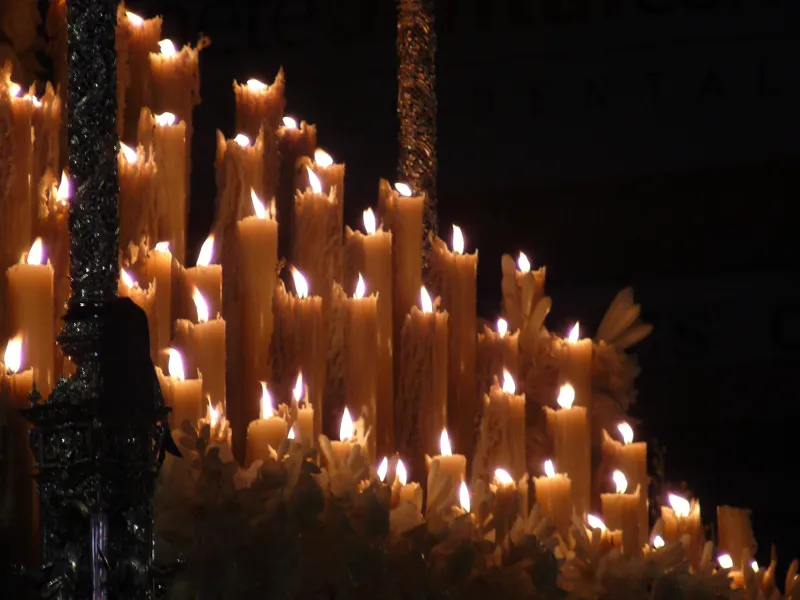
Basílica de la Macarena Guide
How to visit the Basílica de la Macarena in northern Seville: the beloved image of the Virgin of Hope, the on-site treasury museum, the Roman wall beside it, and the basilica's deep ties to Semana Santa.
Read guide
Best Free Things to Do in Seville
The best free things to do in Seville: grand plazas, shaded parks, riverside walks, beautiful churches, viewpoints, free-entry museum windows, and the heat-smart way to string them together without spending a euro.
Read guide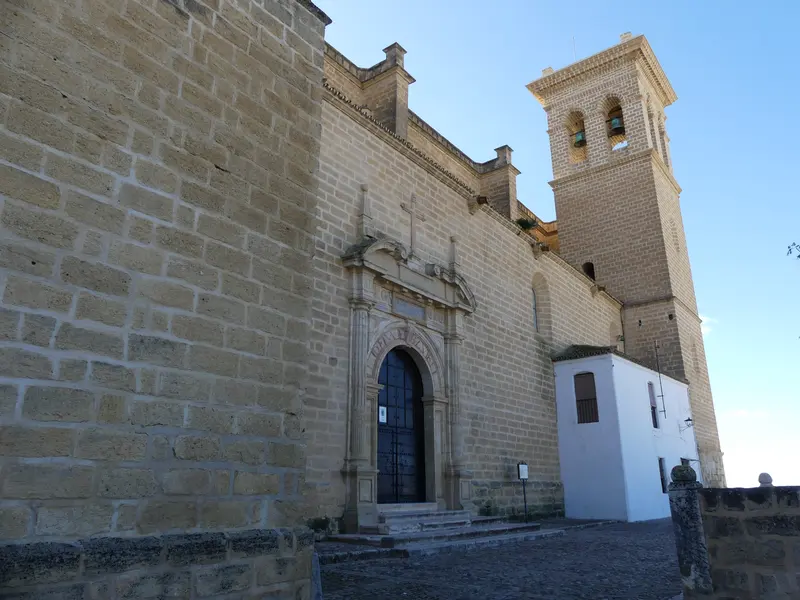
Best Museums in Seville
A decisive guide to Seville's museums: the golden-age paintings of Bellas Artes, the living art of the flamenco museum, contemporary work at the CAAC, ceramics in Triana and the palace-museums — compared by art, history, rain value and who each suits.
Read guide
Best Palaces in Seville
Seville is a city of palaces — royal, aristocratic and ecclesiastical. A decisive guide to the Real Alcázar, Casa de Pilatos, Palacio de las Dueñas and the lesser-known palace-homes: which to choose, how to combine them, and how to avoid palace fatigue.
Read guide
Best Photography Spots in Seville
The best places to photograph Seville and exactly when to shoot them: Plaza de España's tiled curves, Alcázar patios, the Giralda framed down narrow lanes, rooftops, river bridges and Santa Cruz patios — built into a golden-hour route around the heat.
Read guide