

Seville Travel Tips & Practical Guide
Everything that makes a Seville trip run smoothly — getting in from the airport, the tram and trains, tickets and passes, the famous heat, safety, money and when to come — gathered into one calm, romantic-but-practical starting point.

Photo: Hanieh Hosseinlow / Unsplash
- ✓Seville's old centre is small and flat — most of the time you'll simply walk, with the tram, buses and taxis for longer hops.
- ✓Book the Real Alcázar and Cathedral ahead, and in summer see big sights before noon — the heat shapes everything.
- ✓From roughly June to September, treat the afternoon heat seriously: hydrate, seek shade, and slow your pace.
- ✓Santa Justa is the high-speed rail hub for Córdoba, Madrid and the wider region; the airport sits just outside the city with an easy bus and taxi link.
- ✓Spring and autumn are the loveliest, easiest seasons; festival weeks are magical but demand booking far ahead.
First principles: a small, walkable, hot city
Most of what you need to know about Seville flows from two simple facts: the historic centre is compact and flat, and the summer is extremely hot. The first means you will spend most of your time on foot, drifting between the Cathedral, the Alcázar, Santa Cruz and the river without ever needing a map for long — distances that look significant on paper are usually a gentle ten or fifteen-minute stroll. The second means that, for a good half of the year, the clock matters as much as the map: the city you can happily roam at nine in the morning becomes punishing at three in the afternoon, and the whole art of a good Seville day is timing.
So the practical mindset is this: walk by default, use the tram or a taxi when legs or heat demand it, book the few sights that need booking, and let the day breathe around the afternoon. Get those rhythms right and the logistics almost disappear, leaving you free to enjoy a city that is, underneath the planning, one of the most effortlessly romantic in Europe. The pages below go deeper on each piece; this one is the map of the whole.

Arriving: airport, trains and the first hour
Seville Airport (SVQ) sits a short way east of the city and is straightforward to leave. A dedicated airport bus runs into the centre in well under an hour, stopping at useful points including Santa Justa station and the heart of town; taxis run on a published fixed tariff for the airport-to-centre trip, which makes the cost predictable and the choice easy when you're tired or travelling as a group. Pre-booked private transfers are the third option for door-to-door ease. Whichever you choose, the transfer is mercifully simple compared with many big cities.
If you're arriving by rail, you'll come into Santa Justa, Seville's high-speed station and the gateway to Andalusia and beyond — Córdoba is famously close, with Madrid and other cities on fast, comfortable services. The station is a short tram, bus or taxi ride from the old town. Fares, exact timetables and tariffs change over time, so confirm the current details before you travel, but the shape of arriving in Seville is reliably painless. Sort your transfer into the centre before you land and the trip starts on the right foot.
- Airport (SVQ): an airport bus links to the centre and Santa Justa; taxis run on a published fixed airport tariff; private transfers are the easy alternative.
- Rail: Santa Justa is the high-speed hub — quick to Córdoba and on to Madrid and beyond.
- Confirm current fares, timetables and the taxi tariff before you travel — these change.
Getting around once you're here
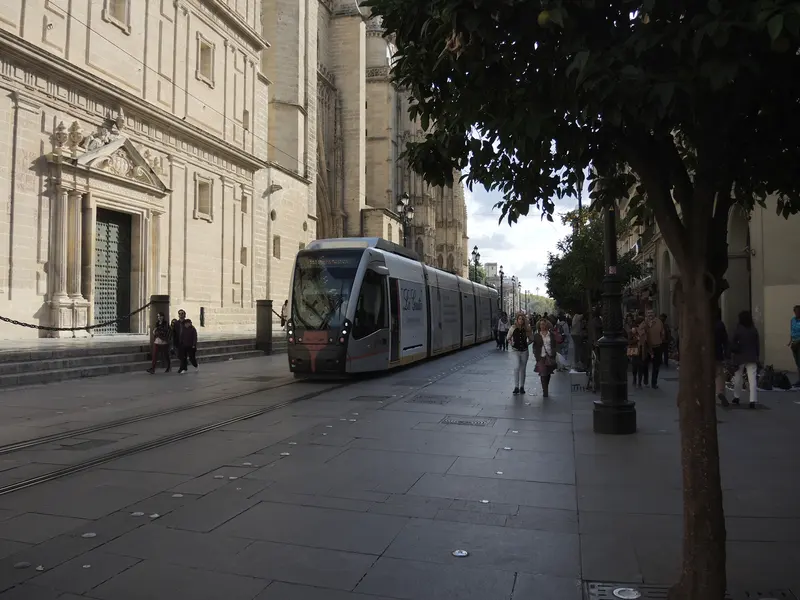
Inside the centre, walking wins almost every time. The core sights are close together and the streets are part of the pleasure, so resist the urge to mechanise short trips. When you do need help — across town, in the heat, or with tired legs — the modern tram glides along the old-town spine past the Cathedral, a single Metro line and a network of buses cover the wider city, and taxis are plentiful and reasonable for short hops. Bikes and the city's bike-share suit the flat riverside and the parks, though the cobbles and crowds of the old core make cycling there less appealing.
Tickets, fares and the exact reach of each line are the kind of detail that shifts, so check the current arrangements locally rather than relying on old figures. The reassuring headline is that you rarely need any of it for long: a typical day is mostly walking, with a single tram or taxi hop to save your legs at the right moment.
- Walk by default in the centre — it's small, flat and the streets are half the point.
- Tram (Metrocentro) runs through the old-town core past the Cathedral; buses, a Metro line and taxis cover the rest.
- Bikes suit the flat riverside and parks more than the cobbled old core.
Tickets, passes and beating the queue
Two sights are worth pre-booking above all others: the Real Alcázar and the Cathedral with its Giralda. Both are deservedly popular, both can build long queues in season, and both let you reserve a timed entry online in advance — securing an early slot is the single most useful planning move you can make, because it gets you inside in the cool, quiet first hour before the crowds and the heat arrive. Buy from the official ticketing for each monument to avoid markups, and screenshot your confirmation so a patchy signal at the door can't trip you up.
Beyond those two, most of Seville's smaller churches, palaces and museums sell tickets on arrival without much fuss, and some offer free-entry windows that change over time — always check the official page rather than trusting a fixed claim. There's no single must-have city pass that suits everyone; whether a combined ticket or tour saves you money depends entirely on your plans, so add up what you'll actually visit before buying one. The general rule holds: book the big two ahead, stay flexible on the rest.
- Pre-book the Real Alcázar and Cathedral/Giralda with timed entry — ideally an early slot.
- Buy from official ticketing to avoid markups; save the confirmation offline.
- Smaller sights are usually fine on the day; check official pages for any (changeable) free-entry windows.
The heat — Seville's defining variable
Nothing shapes a Seville trip more than the weather, and from June to September that means heat at the upper end of what European cities deliver — high-summer afternoons routinely sit in the mid-to-high thirties Celsius and can climb higher. This is not a detail to brush past: it dictates when you sightsee, how much you can comfortably do, and even where you choose to stay. The good news is that the city is built for it. Sevillanos have always run their days around the sun, and you can simply borrow the pattern.
The playbook is consistent and easy to follow: do your monuments and walking in the cooler morning, retreat to shade, a cool room or a long lunch through the worst of the afternoon, and re-emerge for the evening when the streets fill and the air turns gentle. Carry water and drink steadily, wear a hat and sun cover, favour shaded routes and the canopy of María Luisa Park, and never feel you have to push through the midday heat to 'see more'. For weather and any heat warnings, trust the official AEMET forecast rather than guesswork. Respect the heat and Seville stays a joy; ignore it and it will wear you down.
- High summer (Jun–Sep) is genuinely hot — plan, don't push through it.
- Morning sights, afternoon shade/rest, evening paseo — the local rhythm that works.
- Water, hat, sun cover, shaded routes; check the official AEMET forecast for heat warnings.
Money, safety and everyday practicalities
Spain uses the euro, and cards are widely accepted across Seville, though it's sensible to carry some cash for the smallest, oldest tapas bars and for leaving coins behind. Tipping is light by Anglo-American standards — service is included, so people simply round up or leave a little change rather than a set percentage. Meal times run late: lunch from around two in the afternoon, dinner rarely before nine, with many bars only filling later still. Plenty of shops and businesses keep a long midday break, so don't be surprised by a quiet afternoon and a lively late evening.
Seville is generally a safe and welcoming city for visitors, including solo travellers, with the usual big-city caveat: keep an eye on bags and pockets in the busiest tourist crush and on packed transport, where opportunistic pickpocketing is the main thing to guard against. Stay aware in crowds, keep valuables close, and you'll rarely have a problem. A little Spanish — a greeting, please and thank-you — goes a long way and is warmly received. Carry water, a portable charger, sun cover in the warm months and comfortable shoes for the cobbles, and you're equipped for almost anything the city throws at you.
- Euros; cards widely accepted but carry some cash; tipping is light (round up, no fixed percentage).
- Late meal times — lunch ~14:00, dinner rarely before 21:00; expect a quiet midday and lively late evenings.
- Generally safe; the main risk is pickpocketing in tourist crowds and on packed transport — stay aware.
- Pack comfortable shoes for cobbles, plus water, sun cover and a charger.
When to visit and how to plan around the calendar
Timing your trip is the biggest single lever on how the city feels. Spring and autumn are the sweet spots — warm but not punishing, long and golden, with the orange blossom scenting the spring air and the autumn light at its most flattering. Summer is hot and best handled with the heat playbook above; winter is mild, quiet and excellent value, with bright short days and few crowds. Layered over the seasons are Seville's two great festivals, Semana Santa and Feria de Abril, which transform the city in spring: unforgettable to witness, but they send hotel prices and demand soaring, so book months ahead or plan deliberately around them.
Whatever the season, the same logic underpins a good plan: pick a walkable central base, book the big two sights, leave the afternoons soft in the heat, and keep your days a little under-packed so the city has room to surprise you. Sort the logistics on this page early and the rest of your time is free for the part that matters — the gardens at opening, the long tapas evenings, the river at dusk and the golden, unhurried Seville that people come back for.
- Spring and autumn: the easiest, loveliest windows; summer is hot; winter is quiet and good value.
- Festival weeks (Semana Santa, Feria de Abril) are magical but push prices up — book far ahead or plan around them.
- Central walkable base + big sights pre-booked + soft afternoons = a smooth, romantic trip.
A first-timer's three-day shape
If all the logistics feel abstract, here is how they assemble into a real trip. On a typical first visit of two or three days, the rhythm that works is monuments in the cool of the morning, a long lunch and a rest through the hot afternoon, then the city again in the golden evening. Day one: an early Real Alcázar slot, the Cathedral and a Giralda climb next door, lunch in Santa Cruz, and a first tapas crawl after dark. Day two: Plaza de España and María Luisa Park early, the Setas viewpoint, and the afternoon across the river in Triana for the market, ceramics and a flamenco show. A third day buys you a day trip — Córdoba is the easy pick — or a slower wander through Centro, the Macarena and the riverside.
The thread running through all of it is restraint. Seville punishes the over-packed itinerary, both because of the heat and because the city's real pleasures — a shaded courtyard, an unhurried lunch, the river at dusk — only open up when you leave room for them. Pre-book the two big sights, keep the rest loose, and let the afternoons stay soft. Two well-paced days beat three frantic ones every time.
- Morning monuments, long lunch and afternoon rest, then the city again in the golden evening.
- Day 1: Alcázar, Cathedral, Giralda, Santa Cruz, evening tapas.
- Day 2: Plaza de España, Setas, Triana market and a flamenco show.
- Day 3: an easy day trip (Córdoba) or a slow wander — and don't over-pack the days.
Staying connected, language and etiquette
Staying online is easy. EU and most European visitors keep roaming under their home plan; travellers from further afield can buy a Spanish or European eSIM before arrival and have data the moment they land, or pick up a prepaid SIM in the city. Free Wi-Fi is common in hotels and cafés. Spain runs on European two-pin Type C/F plugs at 230V, so bring an adapter. Tap water in Seville is safe to drink, though many locals prefer bottled for taste; a refillable bottle is invaluable in the heat.
A little Spanish goes a long way — hola, gracias, por favor, la cuenta (the bill), and una caña (a small draught beer) will carry you through most encounters, and the effort is warmly received even though tourism-facing staff often speak English. Andalusian Spanish is fast and drops consonants, so don't be discouraged if it sounds different from textbook Castilian. On etiquette: meals run late (lunch from about 2pm, dinner from 9pm), many smaller shops and businesses still close for a midday break, and Sundays are quiet. Dress modestly to enter churches and the Cathedral (covered shoulders and knees), greet shopkeepers when you enter, and don't rush the bill — lingering is the point, not a problem.
For emergencies, the pan-European number 112 reaches police, ambulance and fire and is answered in several languages — worth saving before you travel. Pharmacies (farmacias), marked by a green cross, are plentiful and the pharmacists are a genuinely useful first stop for minor ailments; a rota of farmacias de guardia stays open overnight. EU visitors should carry a European Health Insurance Card, and everyone should travel with insurance. Seville is a safe city by big-city standards, with the main risk being opportunistic pickpocketing in the densest tourist crowds — around the Cathedral, on busy festival days and at packed bars — so keep bags zipped and to the front and you'll rarely have trouble.
- Data: EU roaming, or a Spanish/European eSIM or prepaid SIM for non-EU visitors; Wi-Fi is common.
- Plugs: European Type C/F, 230V — bring an adapter. Tap water is safe to drink.
- A few Spanish phrases are warmly received; Andalusian accent is fast — don't be put off.
- Late meals, midday closures, quiet Sundays; cover shoulders and knees in churches.
Accessibility, families and luggage
Seville is, on the whole, a manageable city for travellers with mobility needs and families, with caveats. The historic centre and Santa Cruz are charming precisely because of their narrow, cobbled, uneven lanes — beautiful to walk but hard going for wheelchairs and strollers, so plan smoother routes along the main avenues and the riverside where you can. The tram and many buses are step-free and the Metro is accessible, and the major monuments have made real efforts: the Cathedral, much of the Alcázar (the Giralda is a ramp, not stairs, though still a long climb) and Plaza de España are largely navigable, though some palace rooms and older sites are not. Always check a specific venue's access provision in advance.
Families do well here: the parks, the river, the open plazas and the relaxed, child-friendly food culture all suit children, and Sevillanos are famously fond of kids out late in the evening. The heat is the main thing to manage with young children — shade, water and afternoon breaks are non-negotiable in summer. For luggage, if you arrive before check-in or leave after check-out, the city has staffed left-luggage lockers and bag-storage services near the centre and the stations, which free you to enjoy a first or last day unencumbered. As ever, confirm current opening hours, prices and access details directly with each provider close to your trip.
A few more small comforts smooth a Seville trip. Public toilets are scarce, so use the facilities in cafés and museums when you can (a quick coffee buys you the right). Carry a refillable water bottle and a small fan in summer — locals of every age use them, and you'll be grateful. Sun cover, a hat and good walking shoes matter more here than in most European cities, given the heat and the cobbles. And build your days around the siesta rhythm rather than fighting it: the early afternoon, when shops shutter and the sun peaks, is the time to eat slowly, nap or sit in a shaded courtyard, not to trudge between sights. Work with the city's habits and Seville rewards you; work against them and the heat will win.
- Cobbled old-town lanes are hard for wheels — use main avenues and the riverside; tram/Metro are step-free.
- Major sights are largely accessible (the Giralda is a long ramp); verify each venue in advance.
- Family-friendly city; manage the summer heat with shade, water and afternoon breaks.
- Left-luggage lockers and bag-storage services near the centre and stations free up arrival/departure days.
At a glance
The quick practical summary. Volatile details — fares, timetables, tariffs, opening hours and any free-entry windows — change over time, so treat these as the shape of the trip and confirm specifics on official sources before you rely on them.
- Currency: euro; cards widely accepted, some cash handy; tipping light.
- Getting in: airport bus or fixed-tariff taxi from SVQ; Santa Justa for high-speed rail (verify fares/times).
- Getting around: mostly walking; tram, buses, one Metro line and taxis for longer hops.
- Must-book: Real Alcázar and Cathedral/Giralda, ideally early timed slots, via official ticketing.
- Heat: serious Jun–Sep — morning sights, afternoon rest, evening paseo; check the official AEMET forecast.
- Best timing: spring and autumn easiest; book far ahead for festival weeks.