
Seville in July
July is peak heat in Seville — one of the hottest big-city months in Europe. A practical guide to thriving rather than surviving: siesta timing, pools, cool indoor sights, late-night street life and exactly how to plan a July trip that works.

- ✓Peak summer: July is genuinely, seriously hot — afternoons routinely in the mid-to-high thirties Celsius, sometimes higher.
- ✓Doable and even wonderful if you commit fully to the heat-smart rhythm; miserable if you try to sightsee through the afternoon.
- ✓A pool or strong air-conditioning is essential, not optional — build your day around a real midday retreat.
- ✓The reward is the night: long, balmy evenings and a city that lives outdoors until very late, plus lower prices than festival-time spring.
What July really feels like
Let's be honest about July: Seville is one of the hottest big cities in Europe, and the middle of summer is its fiercest stretch. Afternoons routinely sit in the mid-to-high thirties Celsius, and heat spikes well beyond are not unusual. The sun is relentless, the nights stay warm, and the brightest hours of the day are simply not the time to be marching around monuments. None of this should put you off — millions enjoy Seville every July — but it does mean the heat is the organising fact of your trip, and pretending otherwise leads to a wretched time.
The good news is that July is entirely manageable, and at night even magical, if you borrow the local pattern wholesale. Sevillanos don't fight the heat; they route around it, doing their business and sightseeing early, resting through the worst of the day, and pouring back into the streets in the cool of the evening. Adopt that rhythm and July becomes a city of early-morning palaces and late-night plazas, with the hardest hours spent comfortably out of the sun. Throughout, carry water everywhere, cover up against the sun, and check the official AEMET forecast — and heed any heat warnings — because July is the month most likely to bring genuinely extreme days.
- Very hot — mid-to-high thirties Celsius afternoons, with real chances of higher spikes.
- The heat is the organising fact of the trip; plan around it and July works beautifully.
- Carry water and sun cover everywhere; nights stay warm.
- Check the AEMET forecast and respect heat warnings — July brings the year's most extreme days.
The siesta-shaped day
A successful July day in Seville has a clear shape. Start early — really early — and do your headline sights and outdoor walking in the relative cool of the morning: the Real Alcázar (book the first slot you can), the Cathedral and Giralda, Plaza de España, a riverside stroll. As the sun climbs and the heat turns punishing, retreat: a long lunch, a pool, an air-conditioned room, a quiet siesta. The middle of a July day is for resting, not sightseeing, and treating it that way is the whole secret.
Use the brightest hours for the city's cool indoor pleasures, chosen deliberately as heat shelters. The Fine Arts Museum, the stone-cool great churches, an air-conditioned flamenco show, a shaded café — all turn the worst of the day into something restful and rewarding. Then, as the heat finally eases in the evening, the city reopens to you: tapas crawls, rooftop drinks, lamplit plazas and the floodlit monuments. July nights in Seville are long, warm and alive, and they're the reason the heat is worth tolerating. Get the sequence right and you'll do plenty — just never in the wrong hours.
- Morning: Alcázar (earliest slot), Cathedral/Giralda, Plaza de España, river — before the heat peaks.
- Midday: rest. A long lunch, a pool, AC or a siesta — do not sightsee in the worst hours.
- Use cool indoor sights (museums, churches, flamenco) as deliberate heat shelters.
- Evening into late night: tapas, rooftops, lamplit plazas — the best of a July day.
Where to stay, crowds and value
In July, your accommodation is not a backdrop — it's central to whether the trip works. A pool or genuinely powerful air-conditioning is essential, because the midday retreat happens every single day and you'll spend real time in your hotel during the hottest hours. If you can stretch to a pool-forward stay, it transforms a July trip from endurance into pleasure; if not, make reliable, strong AC and a short walk to the centre your non-negotiables. This matters far more in July than in any spring month.
There's a genuine upside to coming now: value. July sits well clear of the festival-driven spring peaks, so hotel prices are typically lower and there's no festival crush — you'll share the city with summer visitors, but it won't be heaving the way April can be. You should still pre-book the Alcázar and the Cathedral, both because their queues build the instant the day warms and because standing in line under the July sun is exactly what you want to avoid. Come to Seville in July with a pool, an early alarm and a respect for the heat, and the city gives you its long, glowing nights in return.
- A pool or strong AC is essential, not a luxury — you'll use the room through the midday heat.
- Lower prices than festival-time spring and no festival crush — July is good value.
- Pre-book Alcázar and Cathedral to skip queuing under the July sun.
- Prioritise a short walk to the centre so you're never far from shade or your room.
What to do in July (and what to skip)
July sightseeing is all about timing. Do the heat-sensitive things first: the Real Alcázar at opening, the Cathedral and Giralda before mid-morning, a quick early loop of Plaza de España while the stone is still cool. Then go to ground for the long, brutal middle of the day. This is when Seville's indoor sights earn their keep — the cool Cathedral nave, the shaded patios of Casa de Pilatos, the Museo de Bellas Artes, the air-conditioned Setas exhibition spaces, and a slow, dim tapas bar. Anything involving open ground in full sun — the bullring tour, a long river walk, the white-town day trips — is best avoided between roughly 1pm and 6pm.
After the sun drops, the city comes back to life. The Guadalquivir banks, the rooftop bars, the Alameda de Hércules and the Triana terraces fill up; floodlit monuments look their best; and an open-air flamenco show or a late dinner at ten feels completely natural. If you want a day out of the heat, head for the Atlantic at Cádiz — the sea breeze makes it markedly cooler than inland Seville — rather than the airless white towns, which bake even harder than the city.
- See the Alcázar, Cathedral and Plaza de España at opening; hide indoors at midday.
- Midday refuges: the Cathedral, Casa de Pilatos, Bellas Artes, a cool tapas bar.
- Skip full-sun activities from about 1pm to 6pm; the city revives after dark.
- For a cooler day trip, choose breezy Cádiz over the inland white towns.
What to eat and drink in July
In July you eat to stay cool. Cold soups are the heroes — salmorejo, gazpacho and the lighter ajoblanco (a chilled almond-and-garlic soup, sometimes served with grapes) — and you'll order them daily without tiring of them. Keep meals light and late: pescaíto frito and other Atlantic seafood, ensaladilla rusa, marinated boquerones and pickles (encurtidos), and plenty of fresh fruit. The real July ritual is the granizado — slushed lemon, coffee or horchata — and a stop at a classic heladería for citrus or turrón ice cream is a near-daily necessity rather than a treat.
Drink cold and drink slow. Cold fino and manzanilla sherry, tinto de verano, and clara (beer with lemon soda) are the staples; water between rounds is not optional in this heat. Above all, embrace the late schedule — locals push dinner to ten or later precisely so they can eat once the air has cooled, and the night-time tapas crawl on a terrace is the most enjoyable, sustainable way to eat in a Seville July.
- Cold soups rule: salmorejo, gazpacho and almond-based ajoblanco.
- Keep it light and late: fried fish, ensaladilla, boquerones, fresh fruit.
- The July ritual: granizados and citrus or turrón ice cream.
- Drink cold and slow — fino, tinto de verano, clara — and dine after ten.

Where to stay in July
In July, your hotel is not just a place to sleep — it's your refuge from the heat, so choose it accordingly. The two features that matter most are powerful, in-room air conditioning and a pool; together they let you retreat through the unbearable middle of the day and come back out refreshed in the evening. A central location in Barrio Santa Cruz, El Arenal or Centro still helps, because it shortens the time you spend walking in full sun to and from the monuments, but a poolside room slightly out from the centre often beats a sweltering, pool-less room in the heart of the old town.
Confirm the air conditioning is in your specific room and works overnight, not just in the lobby. Families and longer-stay visitors should look hard at hotels and apartments with real pools in Triana, Los Remedios or the quieter edges of the centre, where you get the space and the midday swim that make a July trip workable. The upside of travelling now is value: July is past the spring festival peak, so rates are softer than April and availability is wider — but a good pool still books up, so reserve ahead.
July at a glance
A quick planning summary. Temperatures are broad seasonal guides and July can run extreme, so always check the official AEMET forecast and heed any heat warnings as your dates approach.
- Weather: very hot — mid-to-high thirties Celsius afternoons, with real chances of higher spikes; warm nights.
- Rhythm: early sights, midday rest by a pool or in AC, long late-night street life.
- Stay: a pool or strong AC is essential; keep walking short.
- Crowds/prices: good value, well below festival-time spring, with no festival crush.
- Book ahead: early Alcázar and Cathedral slots; check AEMET and respect heat warnings.

Seville Summer Heat Guide
How to enjoy Seville in serious heat: an early-start, midday-rest, late-evening rhythm, plus shade routes, pools, taxis, hydration and the safety basics — so the hottest big city in Europe stays a pleasure, not a punishment.
Read guide
Best Hotels with Pools in Seville
Pool-forward hotel choices for spring, summer, families, couples and heat-sensitive travellers: why a pool is close to essential in Seville's hot months, the difference between a rooftop plunge pool and a real swimming pool, and how to choose one that fits your trip.
Read guide
Seville at Night
How to spend an evening in Seville: floodlit monuments, rooftop sunsets, the tapas paseo, flamenco, riverside walks, and the safe, slow rhythm of an Andalusian night — all timed around the heat and the late local clock.
Read guideMore in Best Time to Visit
6
Seville in April
April is peak spring in Seville — warm sun, orange blossom and, most years, the city's two great festivals: the tail of Semana Santa and the riot of Feria de Abril. A guide to the weather, the crowds, the festival logistics and exactly what to book first.
Read guide
Seville in August
What Seville is really like in August — the hottest, quietest month of the year. How to plan around the heat, where to find pools and beaches, why some bars and restaurants close, and how to enjoy the long, balmy evenings when the city finally comes alive.
Read guide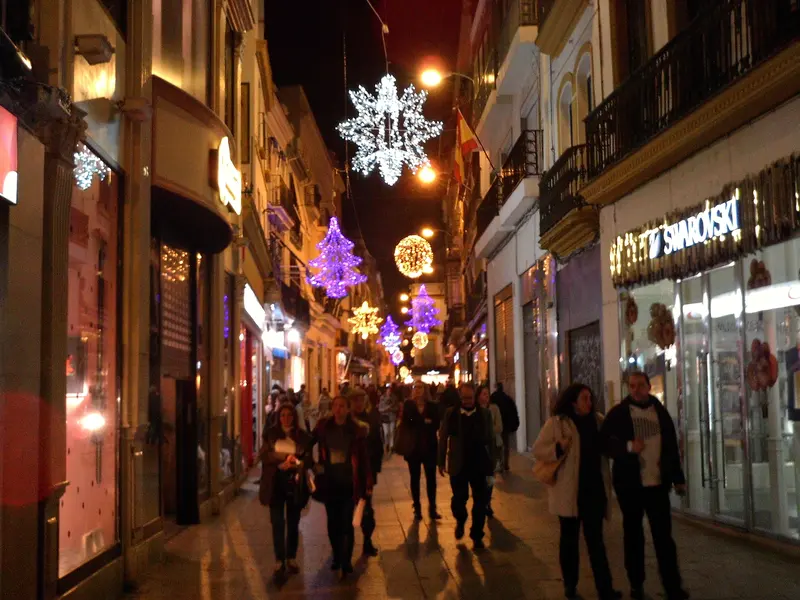
Seville in December
Seville in December — Christmas lights, nativity scenes (beléns) and festive markets, mild cool-weather sightseeing, good shopping, family-friendly plans, and atmospheric evenings, all at the year's gentlest prices outside the holiday peak.
Read guide
Seville in February
February is winter-sun Seville: mild, often bright days, low crowds and gentle prices, with the first hint of spring in the air. A practical month guide to the weather, culture, patios and tapas, early blossom, and how to enjoy the city just before high season arrives.
Read guide
Seville in January
January is Seville at its calmest and cheapest: mild, often sunny days, thin crowds, winter tapas, museums without queues, the post-Christmas sales and easy day trips. A practical month guide to the weather, what's open, what to wear and how to make the most of the off-season.
Read guide
Seville in June
June is early summer in Seville — hot, bright and long-evening'd, the moment the city's heat-smart rhythm kicks in. A guide to pacing your days around the warmth, when a pool matters, late dinners, shaded sights and the magic of June nights.
Read guide