
Doñana Day Trip from Seville
Whether Doñana works as a day trip from Seville: the wetlands and wildlife you'll actually see, the seasons that matter, why you can't drive into the park yourself, and how to build a realistic day around an official 4x4 tour.

Photo: Anual / Wikimedia Commons · CC BY-SA 4.0

- ✓Doñana is one of Europe's most important wetlands — a mosaic of marsh, dune and pine forest at the mouth of the Guadalquivir, roughly an hour to ninety minutes southwest of Seville (verify with live traffic).
- ✓You cannot drive into the core of the national park; access is by authorised 4x4 tour or guided visit from the gateway villages, so plan around an operator rather than a self-drive.
- ✓Wildlife is the whole point: flamingos, deer, wild horses, Iberian birds in their thousands and — with great luck and patience — the elusive Iberian lynx.
- ✓Season changes everything: spring and autumn are the rich migratory windows, summer can be dry and quiet, and winter brings the big waterbird numbers.
- ✓It is doable as a long day from Seville, but it is an early start and a nature day, not a town-and-tapas day — go for the wilderness, not the sights.
Is Doñana worth a day trip from Seville?
Doñana is the wild card among Seville's day trips. While Córdoba, Cádiz and Ronda hand you monuments and tapas, Doñana hands you something rarer in southern Spain: genuine wilderness. It is one of the largest and most important wetland reserves in Europe, a UNESCO-listed mosaic of seasonal marsh, shifting dunes and umbrella-pine forest spread across the delta where the Guadalquivir finally meets the Atlantic. For anyone who travels for birds, big skies and the feeling of getting out of the city entirely, it is a quietly extraordinary half-day to full day.
But be honest with yourself about what kind of trip it is. This is not a place you wander into for an hour between coffees. You go for the landscape and the wildlife, you go early, and you accept that nature does not perform on schedule — some days the marsh is alive with flamingos and deer, others it is hushed and empty. If that uncertainty appeals, Doñana is one of the most rewarding escapes from Seville. If you want guaranteed photo-stops and a pretty old town, Córdoba or Cádiz will serve you far better.
- Best for: birdwatchers, nature lovers, families with patient kids, anyone craving open space.
- Less good for: travellers who want monuments, shopping and a buzzy old town.
- Mood: slow, wild, weather- and season-dependent — go with realistic expectations.
At a glance
A quick-reference card before the detail below. Treat every time, price and schedule as something to confirm close to your trip — Doñana access is tightly managed and operators change their slots seasonally.
- Distance from Seville: roughly 60–95 km depending on the gateway, about 1–1.5 hours by road (verify with live traffic).
- How you get in: authorised 4x4 tour or guided visit only for the protected core — no self-drive inside the park.
- Main gateways: El Rocío and the Acebuche visitor area to the west; Sanlúcar de Barrameda across the river to the south.
- Time needed: a long day — expect an early departure and a half-day or more on the ground.
- Best seasons: spring and autumn for migration; winter for big waterbird numbers; summer is hot and often dry.
- Bring: binoculars, sun cover, water, sturdy shoes and patience — wildlife is never guaranteed.
- Cost: variable by operator and tour length (verify); the park's own areas are often low-cost or free to enter.
What you'll actually see
Doñana's headline is its birds. Sitting on the great migratory flyway between Europe and Africa, the wetland is a staging post for hundreds of thousands of waterbirds, and the cast shifts through the year: greater flamingos wading the lagoons, herons and spoonbills, ducks and geese in winter, and raptors overhead. Even casual visitors who have never owned a pair of binoculars tend to leave converted — the sheer numbers, when the marsh is wet and busy, are genuinely moving.
Beyond the birds, the park shelters red and fallow deer, wild boar and the famous semi-wild Doñana horses, often seen grazing the marsh edges. Its rarest resident is the Iberian lynx, one of the most endangered cats on earth and the symbol of the whole reserve; seeing one is a matter of real luck and a quiet, patient guide, so treat any sighting as a gift rather than an expectation. The landscape itself — the vast flat marisma, the moving dunes, the cork oaks and pines — is the other half of the show.
- Birds: flamingos, herons, spoonbills, raptors and huge seasonal flocks of waterfowl.
- Mammals: red and fallow deer, wild boar, semi-wild horses, and — rarely — the Iberian lynx.
- Landscape: seasonal marsh (la marisma), shifting Atlantic dunes and umbrella-pine forest.
- A good guide is half the trip — local naturalists know where the wildlife moves with the season.
Why you can't just drive in
The single most important thing to understand before you plan is that the protected heart of Doñana is closed to private cars. This is a strictly managed national park, and the core marshland and dunes can only be visited on an authorised guided trip — typically a 4x4 excursion run by licensed operators, or a guided walk in designated zones. It is not an obstacle so much as the reason the place still teems with wildlife: keeping vehicles and crowds out is what protects it.
In practice that means your day revolves around booking an official tour rather than renting a car and finding a trailhead. The gateway villages and visitor centres on the edges of the park do have free or low-cost walking trails, hides and boardwalks you can explore independently, which are excellent for birding in their own right. But to get out into the famous open marsh, you go with a guide. Book ahead, especially in spring and on weekends, as places on the authorised 4x4 trips are limited and fill up.
- No private cars in the protected core — access is by authorised 4x4 tour or guided visit only.
- Edge visitor centres (e.g. around Acebuche and El Rocío) have free trails, hides and boardwalks.
- Book official 4x4 places ahead in spring and at weekends — slots are limited (verify current operators).
- This restriction is the reason the wildlife is still here; treat it as the deal, not a hassle.
Seasons: when to go
Doñana is a different park in every season, and timing your visit well makes an enormous difference to what you see. Spring is the classic window: the marsh is usually still wet from winter rains, migratory birds pour through, wildflowers bloom and the park is at its lushest and most photogenic. Autumn is the quieter sibling of spring — cooler, with returning migrants and softer light — and many regulars consider it the most pleasant time of all to visit.
Winter is the season for sheer numbers: when the marisma floods, vast flocks of ducks, geese and other waterbirds settle in, and the birdwatching can be spectacular even if the days are short and cool. Summer is the trickiest call. The marsh often dries out, much of the birdlife disperses, and the heat that already makes Seville fierce is no kinder here — if you come in July or August, go at first light, carry plenty of water and accept a quieter park. Whatever the season, conditions shift year to year with the rains, so ask your operator what the marsh is actually doing before you book.
- Spring: wet marsh, peak migration, flowers — the postcard season, but busy.
- Autumn: cooler, calmer, lovely light — a connoisseur's choice.
- Winter: short days but huge numbers of waterbirds when the marsh floods.
- Summer: hot and often dry; go at dawn, hydrate hard, expect less wildlife.
Getting there and structuring the day
Doñana spreads across the provinces of Huelva, Seville and Cádiz, and there is no single front door. The most common land approach from Seville is westward toward the El Rocío and Acebuche side, roughly an hour to ninety minutes by car depending on traffic and exactly where you're headed (verify with live conditions). The other classic gateway is Sanlúcar de Barrameda to the south, on the far bank of the Guadalquivir, from where boat-based trips cross into the park — a wonderful option that pairs naturally with sherry country.
Because the park has no easy public-transport link and you can't self-drive the core, the cleanest way to do Doñana from Seville as a day trip is to join an organised excursion that handles the transfer and the in-park guiding together, or to drive yourself to a gateway and book onto a local 4x4 or boat tour from there. Either way, build the day around the tour's start time and an early alarm. A realistic shape is: leave Seville early, reach the gateway mid-morning, spend the core hours on a guided 4x4 or boat trip and the visitor-centre trails, then return to Seville for dinner.
- Western gateway: El Rocío / Acebuche, roughly 1–1.5 hours from Seville by road (verify).
- Southern gateway: Sanlúcar de Barrameda, with boat trips across the Guadalquivir into the park.
- Easiest day-trip format: an organised excursion combining transfer + in-park guiding.
- Self-drive alternative: drive to a gateway, then book a local 4x4 or boat tour on arrival.
- Plan the whole day around the tour slot and an early start — this is not a sleep-in escape.
El Rocío: the village worth lingering for
Even if the wildlife is the reason you came, leave time for El Rocío, the strange and beautiful village on the park's northwestern edge. With its sandy, unpaved streets, wooden hitching rails outside the houses and a great white church looking out over the marsh, it feels less like modern Spain than a frontier town that never quite caught up — and that is exactly its charm. For much of the year it is sleepy and half-empty, which only adds to the atmosphere.
From the church and the lakeside promenade you can watch the marsh come alive with birds without setting foot in a tour vehicle — flamingos and waterfowl gather right at the village's feet. Once a year, the village explodes into the Romería del Rocío, one of Spain's largest pilgrimages, when hundreds of thousands of pilgrims arrive on horseback and in ox-drawn wagons; if your visit happens to coincide, expect a very different, crowded and chaotic experience, so check dates and plan accordingly (verify current dates).
- El Rocío: sandy streets, hitching rails and a white church over the marsh — wonderfully odd.
- Watch birds from the lakeside promenade without any tour at all.
- The annual Romería del Rocío pilgrimage transforms the village — check dates before you go.
Practical tips and honest expectations
Pack like a nature day rather than a city day: binoculars are close to essential, and a long lens rewards photographers. Bring sun cover, layers for an early start, plenty of water and closed shoes for sandy, sometimes muddy ground. There is little shade out on the marsh, and facilities inside the park are minimal, so stock up at a gateway village before you head out.
Most importantly, manage your expectations and let the place be what it is. Wildlife sightings are never guaranteed; the lynx in particular is a long shot, and even flamingos move with the water. Treat the guide's knowledge, the silence and the scale as the reward, and any big sighting as a bonus. Confirm tour times, prices and meeting points directly with your operator shortly before you go, since access rules and schedules in a protected park like this change with the season and the conditions on the ground.
- Essentials: binoculars, sun cover, water, layers and sturdy, closed shoes.
- Stock up in a gateway village — facilities inside the park are sparse.
- No guaranteed sightings; enjoy the landscape and treat big wildlife as a bonus.
- Verify tour times, prices and meeting points with your operator just before you go.

Best Beaches Near Seville
Seville has no beach of its own, but the Atlantic is closer than you think. A practical guide to the best beaches within reach — Cádiz, the Costa de la Luz, Huelva, Matalascañas and the Doñana coast — with how to get there by train, bus or car, when to go, and how to turn a hot Seville day into a sea breeze.
Read guide
Best Day Tours from Seville
When a guided day tour beats doing it yourself — and which ones are genuinely worth it. A comparison of organised day trips from Seville to Córdoba, Ronda and the white villages, Cádiz, Jerez, Itálica and Doñana, by who they suit, what they solve and when you're better off taking the train alone.
Read guide
Seville with Kids
How to enjoy Seville with children: family-friendly palaces and gardens, the boats at Plaza de España, shaded parks, easy food stops, riverside ideas, and the heat breaks that keep everyone happy.
Read guideMore in Day Trips
6
Cádiz Day Trip from Seville
How to do Cádiz from Seville: a relaxed train to one of Europe's oldest cities, with a sea-wrapped old town, golden cathedral, fresh seafood and city beaches — plus the timing, the weather watch and when Cádiz beats another inland culture day.
Read guide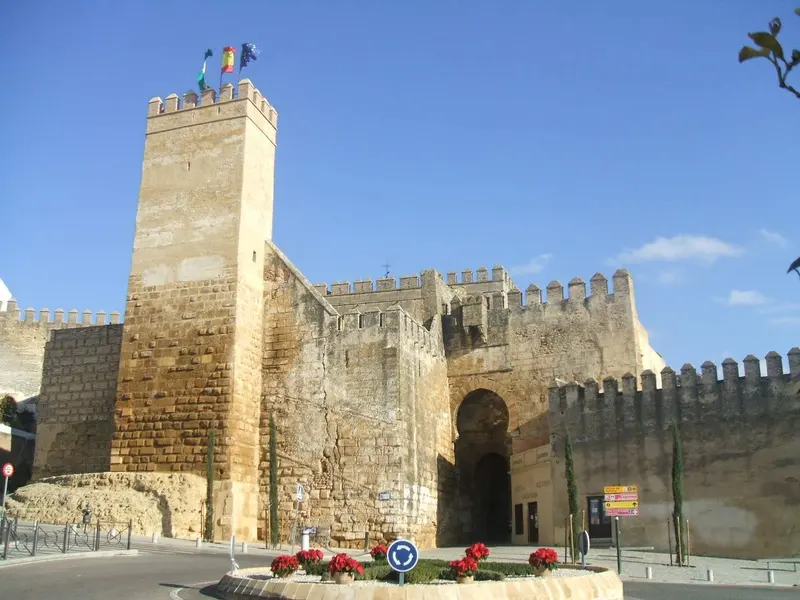
Carmona Day Trip from Seville
How to do Carmona from Seville: the Roman gates and necropolis, the clifftop viewpoints over the Vega, a parador lunch with a view, bus timing, and why this hilltop town makes one of the easiest small-town escapes from the city.
Read guide
Córdoba Day Trip from Seville
How to do Córdoba from Seville: the fast high-speed train versus a tour, booking the Mezquita-Catedral, a relaxed route through the Judería, patios and Roman bridge, and the heat-and-timing tradeoffs that make or break the day.
Read guideCórdoba or Cádiz from Seville?
Both Córdoba and Cádiz are easy, train-friendly day trips from Seville — but they're completely different days out. A clear-headed comparison by travel time, season, heat, food, scenery and the kind of traveller you are, so you can pick the right one (or sequence both).
Read guide
Gibraltar Day Trip from Seville
Whether Gibraltar is worth the long day from Seville: the distance and border reality, the passport and currency quirks of crossing into British territory, what the Rock and its apes actually deliver, and how a tour compares with going it alone.
Read guide
Granada Day Trip from Seville
An honest look at Granada as a day trip from Seville: why the distance and the Alhambra ticket system make it a stretch, how trains, buses and tours compare, and the better alternatives if a single day won't do it justice.
Read guide