
Plaza de España Guide
The best time to visit Plaza de España, the tiled province benches, rowing the canal, where to stand for photos, and how to pair Seville's grandest square with María Luisa Park next door.

- ✓Free to enter and open year-round — there's no ticket to wander the square, the bridges or the colonnades.
- ✓Come at sunrise or golden hour for the warmest light, the quietest galleries and the best reflections in the canal.
- ✓Forty-eight tiled alcoves line the curve, one for each province of Spain — find your province and the map is a small thrill.
- ✓You can row a small boat on the short canal under the tiled bridges (a paid, seasonal extra — verify locally).
- ✓It sits at the edge of María Luisa Park, so pair it with a shaded loop for the easiest heat escape in the city.
Seville's grandest open-air set piece
If the Alcázar is Seville's most romantic interior, Plaza de España is its most theatrical exterior — a sweeping half-moon of brick and tile that seems built for the moment you walk into the middle of it and turn slowly around. It was raised for the 1929 Ibero-American Exposition as Spain's showcase pavilion, and the architect Aníbal González gave it a deliberately Spanish blend of Renaissance, Baroque and Moorish-revival flourishes: a curving palace wrapped around a plaza, a canal arced across the front, four tiled bridges, and a central fountain that catches the light.
It is, quite simply, one of the most photographed places in Spain, and film crews have made the most of it too: the great curved colonnade doubled as a city on the planet Naboo in Star Wars: Attack of the Clones, a connection that draws fans to the tiled benches year-round — but none of that prepares you for the scale of it in person. The square is enormous, generous, made for slow walking and longer pausing. For couples it's a golden-hour classic; for families it's a place where kids can run and there's a boat to row; for anyone, it's free, and it never closes its open spaces, which makes it one of the great gifts of a Seville visit.
The design carries a message, too. The 1929 Exposition was meant to reconcile Spain with its former colonies in the Americas, and the plaza's embracing, arms-open curve was conceived as a symbolic gesture of welcome — a country reaching out to its old empire. The two great towers at either end, the bridges over the canal, and the painted alcoves all tie the architecture back to the regions and history of Spain itself. You don't need to know any of this to be swept up by the place, but it adds a layer of meaning to what can otherwise feel like pure spectacle: this is a stage built to say something, and it still does.

The province benches — find yours
The detail everyone remembers is the run of tiled alcoves along the base of the curving wall: forty-eight of them, one for every province of Spain, arranged alphabetically around the sweep. Each is a small painted-tile tableau showing the province's coat of arms, a map, and a scene from its history, framed in ceramic and topped with shelves that once held reference books. They are the perfect place to sit in shade for a few minutes, and finding the bench for a province you know — or your family's home town — is the kind of small treasure hunt that turns a sightseeing stop into a memory.
The tilework here is a showcase of Seville's azulejo tradition, the same craft you'll find in the workshops of Triana across the river. Photographers gravitate to the benches in the soft early light, when the colours glow and the alcoves are empty enough to frame cleanly. It's worth slowing down to look closely: the painting is far finer than a quick glance suggests.
- Forty-eight alcoves, one per Spanish province, arranged alphabetically around the curve.
- Each shows the province's arms, a map and a historical scene in painted azulejo tile.
- Shaded and photogenic — the best spot for a sit-down in soft early light.

Rowing the canal and other small pleasures
A short canal arcs across the front of the square, crossed by four ornamental tiled bridges that represent the ancient kingdoms of Spain. You can hire a little rowing boat and paddle the gentle curve beneath the bridges — a low-key, faintly old-fashioned delight that costs little and looks wonderful from above. It's a seasonal, weather-dependent and paid extra, run on the spot rather than booked far ahead, so treat the specifics as something to confirm when you arrive; the experience itself is the point, not the logistics.
Even without the boat, the square gives you plenty to do simply by being in it: walk the upper colonnade for the long view down the curve, stand at the central fountain, watch the buskers and the occasional flamenco dancer who set up in the shade, and let the scale of the place do its work. It's the rare big sight that's just as good for doing nothing as for ticking off.
Climb the small staircases at the bridges and walk the elevated gallery that runs along the curve: from up there the whole composition resolves — the canal sweeping below, the bridges marching across it, the fountain at the focal point and the towers framing each end. It's the best vantage for understanding the geometry of the place, and a quieter spot to stand than the busy ground level. Listen, too, for the flamenco guitar and the click of castanets that often drift up from a dancer performing under the arcade; in the right light, with the music echoing off the tiles, the plaza delivers one of those unplanned Seville moments that outshine any monument.
At a glance
A quick reference before you go. The square's open areas are free and effectively always accessible; the volatile details are the boat hire and any seasonal arrangements, so confirm those on the spot or with the local tourist office rather than relying on a fixed figure.
- Cost: free to enter and wander — no ticket for the square, bridges or colonnades.
- Best time: sunrise or the golden hour before sunset for light, calm and reflections.
- Rowing boats: a paid, seasonal, weather-dependent extra hired on site (verify locally).
- Where it is: at the edge of María Luisa Park, a walkable stretch south of the Cathedral and Santa Cruz.
- Accessibility: largely flat and open, making it one of the more wheelchair-friendly major sights.
- Pair with: a shaded loop of María Luisa Park next door, ideally as your afternoon heat break.
Best time to visit — and beating the crowds and heat
Plaza de España is busiest from mid-morning through mid-afternoon, when tour groups and the midday sun arrive together. The fix is the same one that serves you everywhere in Seville: go early or go late. At sunrise the square is almost empty, the light is soft and warm on the brickwork, and the canal lies still enough to mirror the bridges — it's the photographer's and the romantic's hour, and it costs nothing to claim it. The golden hour before sunset is the next-best window, busier but glorious.
From June to September, the open plaza offers little shade in the middle of the day, and the brick holds the heat, so the midday hours are the ones to avoid for comfort. Use the colonnade and the province alcoves for shade if you must visit warm, carry water, and lean on the adjacent park canopy. In spring and autumn the square is a pleasure at almost any hour; winter brings short, bright, quiet days that are lovely for a slow wander.
- Quietest and most beautiful: sunrise, then the golden hour before sunset.
- Busiest and hottest: late morning to mid-afternoon — the window to avoid in summer.
- Shade is limited in the open square; use the colonnade and alcoves, and carry water in warm months.
Pair it with María Luisa Park
Plaza de España doesn't stand alone — it opens straight onto María Luisa Park, the great shaded garden of the city, and the two are best visited as a single outing. The natural rhythm is to do the square in the cooler light, then melt into the park's palm avenues, fountains and tiled benches for the warmer part of the day, where the canopy keeps the temperature down and the pace slows to a stroll. It's the single easiest heat escape in central Seville, and the most pleasant way to spend the hours when the monuments are too hot and too busy.
From here you're also well placed for the cluster of buildings around the park's southern end and a gentle walk back toward the river. Build the plaza-and-park combination into a late-afternoon or early-evening slot and you've got a relaxed, romantic, low-cost half-day that asks nothing of a ticket queue — the kind of Seville interlude people remember as fondly as the headline sights.
Getting there and how long to stay
Plaza de España sits a short walk south of the Cathedral and Barrio Santa Cruz, past the old tobacco factory that's now the university — twenty minutes or so on foot, and a lovely stroll in the cooler hours. If the heat is up or you'd rather save your legs, the city tram and several bus lines run nearby along the Avenida de la Constitución and toward the Prado de San Sebastián, leaving a brief walk to the square; a horse-drawn carriage from the Cathedral is the classic, if pricier, romantic option. There's nothing to book and no entry queue, so you can simply turn up whenever the light suits you.
How long you need depends on your appetite for it. A quick visit to take in the scale and the photographs is twenty to thirty minutes; a proper one — finding your province bench, walking the gallery, rowing the canal, sitting by the fountain — easily fills an hour or two, especially folded into a longer afternoon in María Luisa Park. Because it's free and open, it's also a wonderful place to return to: many visitors come once for the spectacle and again at a different hour just to see it in another light.
- On foot: roughly 20 minutes south from the Cathedral and Santa Cruz.
- By transit: tram and bus lines run nearby (Avenida de la Constitución / Prado de San Sebastián) — verify routes locally.
- Time needed: 20–30 minutes for a quick look; 1–2 hours to do it justice with the park alongside.

A few practical notes
A handful of small things smooth the visit. Bring water and sun cover in the warm months — the open square offers little shade. Wheelchair users and families with strollers will find the plaza unusually friendly, since the ground level is broad and flat, though the elevated gallery is reached by steps. Buskers and informal vendors work the square, especially at busy times; a smile and a no are all you need. As ever in a popular spot, keep an ordinary eye on bags and phones, particularly when you're absorbed behind a camera.
Finally, treat any figure you read about boat-hire prices, opening arrangements or seasonal events as provisional: these are run locally and shift with the season and the weather. The constants are the ones worth holding onto — the square is free, it's open, and it is at its most magical when the light is low and the crowds are thin. Get the timing right and the rest takes care of itself.


María Luisa Park Guide
Shaded walks, tiled fountains, hidden plazas, picnic stops and museums in María Luisa Park — the green heart of Seville, and the easiest place to escape the heat right beside Plaza de España.
Read guide
Best Photography Spots in Seville
The best places to photograph Seville and exactly when to shoot them: Plaza de España's tiled curves, Alcázar patios, the Giralda framed down narrow lanes, rooftops, river bridges and Santa Cruz patios — built into a golden-hour route around the heat.
Read guide
Seville with Kids
How to enjoy Seville with children: family-friendly palaces and gardens, the boats at Plaza de España, shaded parks, easy food stops, riverside ideas, and the heat breaks that keep everyone happy.
Read guideMore in Things to Do
6
Archivo de Indias Guide
Why the Archivo General de Indias belongs on your Seville list: what's inside the great archive of the Spanish Americas, the Renaissance building it lives in, how free entry works, and how to slot it between the Cathedral and the Alcázar.
Read guide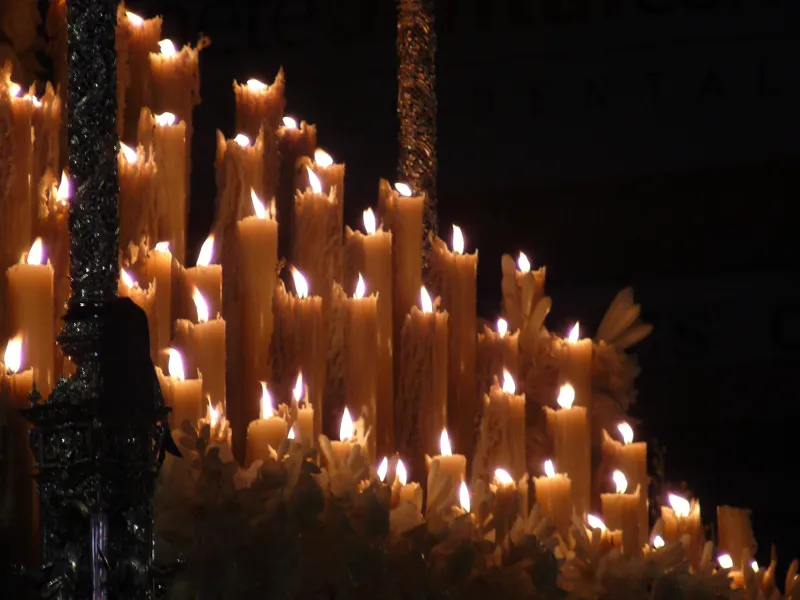
Basílica de la Macarena Guide
How to visit the Basílica de la Macarena in northern Seville: the beloved image of the Virgin of Hope, the on-site treasury museum, the Roman wall beside it, and the basilica's deep ties to Semana Santa.
Read guide
Best Free Things to Do in Seville
The best free things to do in Seville: grand plazas, shaded parks, riverside walks, beautiful churches, viewpoints, free-entry museum windows, and the heat-smart way to string them together without spending a euro.
Read guide
Best Museums in Seville
A decisive guide to Seville's museums: the golden-age paintings of Bellas Artes, the living art of the flamenco museum, contemporary work at the CAAC, ceramics in Triana and the palace-museums — compared by art, history, rain value and who each suits.
Read guide
Best Palaces in Seville
Seville is a city of palaces — royal, aristocratic and ecclesiastical. A decisive guide to the Real Alcázar, Casa de Pilatos, Palacio de las Dueñas and the lesser-known palace-homes: which to choose, how to combine them, and how to avoid palace fatigue.
Read guide
Best Tours in Seville
Which guided tours in Seville are actually worth it: skip-the-line Alcázar and Cathedral visits, food and tapas tours, flamenco experiences, bike rides, river cruises and day trips — compared by who they suit, when to book, and where you're better off going solo.
Read guide