
Seville Cathedral & Giralda Guide
How to visit Seville Cathedral and the Giralda: tickets, the ramped tower climb, the art and the Columbus tomb, the orange-tree courtyard, and how to pair it all with the Alcázar and Santa Cruz.

Photo: Lothar Boris Piltz / Unsplash
- ✓The largest Gothic cathedral in the world by volume, built on the footprint of the city's great mosque.
- ✓The Giralda is a former minaret you climb by ramp, not stairs — the gentlest great tower climb in Europe.
- ✓Inside: the monumental tomb attributed to Christopher Columbus and a treasury of Sevillian painting.
- ✓The free Patio de los Naranjos — the orange-tree courtyard — is a survivor of the original mosque.
- ✓It sits a minute from the Alcázar and Santa Cruz, the heart of the UNESCO old town.
A cathedral built to astonish
When Seville's Christian rulers set out to replace the city's great Almohad mosque in the early 15th century, the story goes that they resolved to build a church so vast that those who saw it would think them mad. They succeeded. Seville Cathedral — formally the Cathedral of Saint Mary of the See — is the largest Gothic cathedral in the world by volume, a forest of soaring stone piers under vaults that seem to float impossibly high.
It stands on the rectangular footprint of the mosque it replaced, and two great survivors of that earlier building remain: the orange-tree courtyard where the faithful once performed ablutions, and the minaret that became the Giralda bell-tower. Walking from the Islamic courtyard into the Gothic nave, you cross between two civilisations in a few steps — the layered story that makes Seville's old town a single UNESCO World Heritage Site with the neighbouring Alcázar and Archivo de Indias.

A scale that's hard to grasp
Numbers struggle to convey the Cathedral, but they try: it covers a vast footprint, its central nave soars to dizzying height, and by interior volume it outranks every other Gothic cathedral on earth. It took more than a century to build, beginning in the early 15th century, and successive generations added chapels, sacristies, the bell-stage of the tower and centuries of art. The building was recognised, with the Alcázar and the Archivo de Indias, as a UNESCO World Heritage Site — a single inscription that captures how tightly Seville's Islamic, Christian and imperial histories are knotted together here.
What makes the scale moving rather than merely impressive is the contrast at the doors. You step in from a sun-blasted square into a cool, dim, cavernous space where the eye is pulled upward and the noise of the city falls away. It's one of the great architectural shifts of mood in Europe, and it lands hardest if you pause just inside the entrance before walking on.

Inside the Cathedral
The interior is a treasury as much as a church. At its heart, behind the choir, rises the Retablo Mayor — one of the largest altarpieces in Christendom, a wall of gilded carved scenes that took generations to complete and rewards long, slow looking. Around the ambulatory and side chapels hang works by Sevillian masters, and the sacristies and chapter house hold paintings, silver and a domed ceiling worth craning your neck for.
The monument most visitors seek out is the tomb attributed to Christopher Columbus, where an ornate catafalque is borne aloft by four heralds representing the kingdoms of Spain. Whether all of the explorer's remains rest here has long been debated, but the monument itself is unforgettable. Give yourself time to wander the chapels, find the quieter corners, and look up — the scale only really lands when you stop walking and let it.
Don't overlook the smaller spaces. The Capilla Mayor and the royal chapel, the treasury with its monstrances and reliquaries, and the beautifully proportioned chapter house each reward a pause. The Cathedral is the kind of building where the more attention you give it, the more it gives back: a side chapel you nearly walked past turns out to hold a remarkable canvas; a doorway frames the tower; a shaft of light falls across the stone. Move slowly and let the place unfold rather than marching for the exit.
- Retablo Mayor — a monumental gilded altarpiece, one of the largest in the world.
- Tomb of Columbus — the catafalque carried by four crowned heralds.
- Sacristies and chapter house — painting, silver and richly worked ceilings.
- Side chapels — Sevillian Golden Age art in quieter corners.
Climbing the Giralda
The Giralda is the Cathedral's great surprise. Built as the minaret of the mosque in the 12th century and topped with a Renaissance bell-stage centuries later, it rises around a hundred metres and is crowned by the Giraldillo, a bronze weathervane figure that gives the tower its name. The climb to the bell level is famously gentle: instead of stairs, you ascend a series of broad ramps, built so that the muezzin — and later officials — could ride up on horseback.
That makes it the most accessible great tower climb in Europe for anyone who finds spiral staircases hard. It is still a steady uphill walk of some distance, and there's no lift, but the ramps are wide and the gradient forgiving, with windows along the way framing the rooftops. The reward at the top is a 360-degree panorama over the old town — the Cathedral's own buttresses below you, the Alcázar gardens, the river, and the terracotta sea of roofs stretching to the horizon.
Access to the tower is included with Cathedral admission. Go early or late to avoid the warmest, busiest part of the day, and remember there is no air conditioning in a centuries-old stone tower — in summer, the morning is far kinder.
A few honest words on who should think twice: the ramps are gentle, but there are dozens of them, and it's a sustained uphill walk that gets warm in summer; anyone with significant breathing or heart issues should weigh it up, and there is no lift to the bell stage. For most reasonably mobile visitors, though, it's a far easier climb than its height suggests, and the panorama from the top — the patchwork of terracotta roofs, the Alcázar greenery, the river beyond — is one of the most memorable views in Andalusia and well worth the effort.
The Patio de los Naranjos
Before or after the church itself, step into the Patio de los Naranjos, the orange-tree courtyard on the Cathedral's northern side. This was the ablutions court of the old mosque, and its grid of orange trees, its central fountain (reusing an even older basin) and its surviving Moorish gateway, the Puerta del Perdón, make it one of the most atmospheric corners of the complex.
In late winter the trees hang heavy with bitter Seville oranges; in spring the blossom perfumes the whole square. It's a cool, shaded place to pause, and the courtyard can usually be enjoyed as part of your visit. The bitter fruit, incidentally, isn't for eating off the tree — but it is the same variety that ends up in the famous Seville marmalade.
Tickets and how to visit
The Cathedral sells tickets that typically include the church, the Giralda climb and, often, the nearby El Salvador church on a combined ticket — book online through the official cathedral site to choose a time and avoid the queue at the door. As at the Alcázar, an advance timed entry is the smart move in peak season. Guided rooftop tours, which take you up among the buttresses and vaults, are a separate, limited experience booked ahead.
Prices, opening hours, and any free or reduced admission (there are concessions, and sometimes designated free windows for certain visitors) change over time, so confirm the current details on the official site rather than trusting a third-party page. Note that as a working place of worship, hours can shift around services and religious events, especially during Holy Week.
- Standard ticket usually covers the Cathedral + Giralda climb, often with El Salvador church.
- Book a timed entry online in advance during busy periods.
- Rooftop tours are a separate, limited, bookable experience.
- Verify current prices, hours and free-entry rules on the official site (they change).
When to go
Early morning is the sweet spot: cooler air for the Giralda climb, softer light in the courtyard, and fewer tour groups inside. Late afternoon can also work, with the bonus that the brick of the tower glows amber as the sun lowers — beautiful from the Plaza del Triunfo and the surrounding lanes. Avoid the late-morning crush if you can, and check for service times that may affect access.
Dress is relaxed but, as in any active church, a degree of modesty is expected. Allow around an hour and a half for the Cathedral and tower together, more if the art holds you. In summer, doing the tower before the heat builds is the difference between a pleasant climb and a sweaty one.

Visiting a working church respectfully
It's easy to treat the Cathedral purely as a monument, but it remains an active place of worship and the seat of the city's archbishop. That has practical consequences worth knowing. Opening hours for tourist visits work around services, and certain areas may be closed during Mass or religious events; during Semana Santa in particular, the Cathedral plays a central role in the processions and normal visiting is heavily disrupted. Check the official schedule for your dates.
Inside, the usual courtesies apply: keep your voice down, dress with a degree of modesty as you would in any church, and be discreet with photography around anyone at prayer. None of this dampens the visit — if anything, the living, liturgical character of the place deepens it. You're not walking through a museum that happens to look like a church; you're in one of Christendom's great cathedrals, still doing the job it was built for.

Pair it with the neighbours
The Cathedral anchors the tightest cluster of sights in the city. The Real Alcázar is a minute away across the Plaza del Triunfo, and the cool, often-free Archivo de Indias sits on the same square — a perfect, calm breather between the two grand monuments. The lanes of Barrio Santa Cruz begin just beyond, ideal for lunch and an aimless wander once you've climbed the tower.
A classic morning runs Alcázar first, then the Cathedral and Giralda, then the Archivo as a cool pause, then tapas in Santa Cruz. Come golden hour, find a rooftop terrace nearby for a drink with the Giralda lit up — one of Seville's defining views, and the easiest way to end the day well.

Giralda Tower Climb Guide
What the Giralda climb is really like — the ramps instead of stairs, the views over the old town, the best time to go, and who should happily skip it — so you can fold Seville's most famous tower into a Cathedral visit without surprises.
Read guide
Seville Cathedral Rooftop Tour
How the Seville Cathedral rooftop tour differs from a standard visit — what you see up among the vaults and buttresses, how to book it, the fitness and access notes, and whether it's worth it for you.
Read guide
Archivo de Indias Guide
Why the Archivo General de Indias belongs on your Seville list: what's inside the great archive of the Spanish Americas, the Renaissance building it lives in, how free entry works, and how to slot it between the Cathedral and the Alcázar.
Read guideMore in Things to Do
6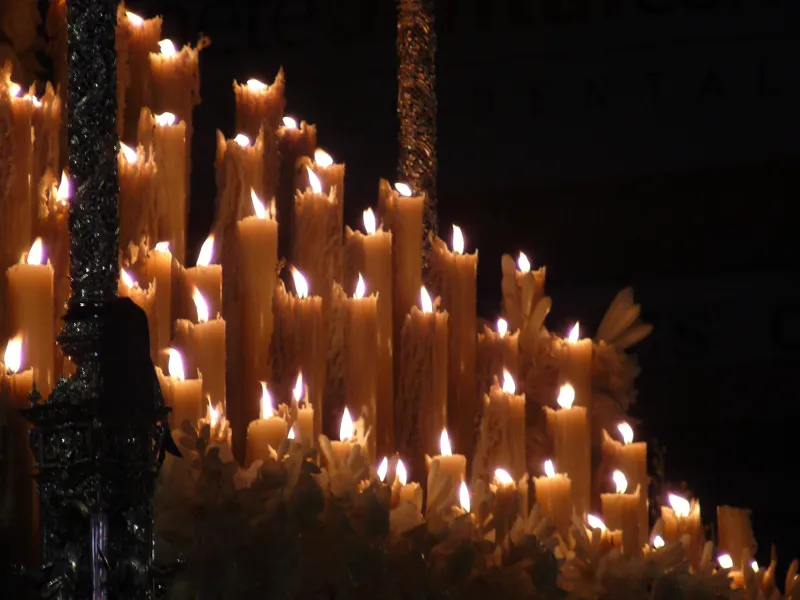
Basílica de la Macarena Guide
How to visit the Basílica de la Macarena in northern Seville: the beloved image of the Virgin of Hope, the on-site treasury museum, the Roman wall beside it, and the basilica's deep ties to Semana Santa.
Read guide
Best Free Things to Do in Seville
The best free things to do in Seville: grand plazas, shaded parks, riverside walks, beautiful churches, viewpoints, free-entry museum windows, and the heat-smart way to string them together without spending a euro.
Read guide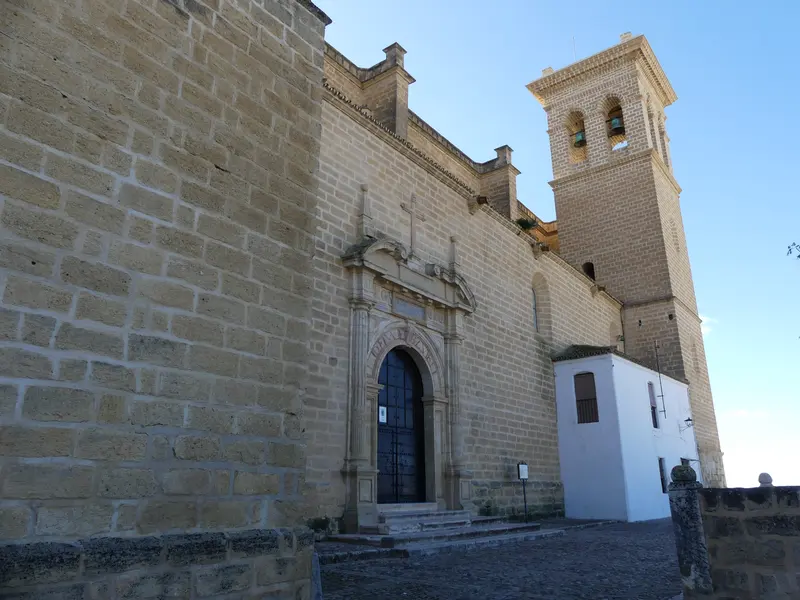
Best Museums in Seville
A decisive guide to Seville's museums: the golden-age paintings of Bellas Artes, the living art of the flamenco museum, contemporary work at the CAAC, ceramics in Triana and the palace-museums — compared by art, history, rain value and who each suits.
Read guide
Best Palaces in Seville
Seville is a city of palaces — royal, aristocratic and ecclesiastical. A decisive guide to the Real Alcázar, Casa de Pilatos, Palacio de las Dueñas and the lesser-known palace-homes: which to choose, how to combine them, and how to avoid palace fatigue.
Read guide
Best Photography Spots in Seville
The best places to photograph Seville and exactly when to shoot them: Plaza de España's tiled curves, Alcázar patios, the Giralda framed down narrow lanes, rooftops, river bridges and Santa Cruz patios — built into a golden-hour route around the heat.
Read guide
Best Tours in Seville
Which guided tours in Seville are actually worth it: skip-the-line Alcázar and Cathedral visits, food and tapas tours, flamenco experiences, bike rides, river cruises and day trips — compared by who they suit, when to book, and where you're better off going solo.
Read guide