
Where to Stay for Feria de Abril
The best areas to base yourself for Feria de Abril: how the fairground location reshapes the usual hotel advice, the trade-off between walking distance and old-town atmosphere, what the noise and price pressure are really like, and why you must book far ahead.

Photo: Davide Scutellaro / Unsplash
- ✓Feria de Abril takes place on a dedicated fairground in Los Remedios, on the far (west) side of the river — not in the historic centre.
- ✓Los Remedios and neighbouring Triana put you within walking distance of the fairground; the old town keeps you near the monuments but adds a longer walk or transport home.
- ✓Prices spike steeply and the best rooms vanish months ahead — Feria is one of the two most expensive weeks of the Seville year.
- ✓Feria runs late into the night every night; light sleepers near the fairground should expect noise and choose their room accordingly.
- ✓If Feria is the whole point of your trip, prioritise walking distance to the fairground; if you're combining it with sightseeing, weigh a central base instead.
- ✓Always verify the exact Feria dates, current prices and walking routes for your year — the dates move and rates change annually.
Why Feria changes the usual advice
For most of the year, the answer to 'where should I stay in Seville?' is simple: the old town, because everything you want is a short flat walk away. Feria de Abril rewrites that rule, because the festival's centre of gravity is not the cathedral but a vast purpose-built fairground in Los Remedios, on the far side of the Guadalquivir from the historic core. For one extraordinary week, the city's nightlife, its dressing-up, its dancing and its late-night energy all migrate across the river — and where you sleep should follow that, at least in part.
Feria is unlike anything else on the European calendar: a temporary city of striped marquees called casetas, hung with thousands of paper lanterns, where Sevillanos in flamenco dress eat, drink, and dance sevillanas until dawn beneath a giant illuminated entrance gate. It runs every night for about a week, roughly a fortnight after Holy Week (the exact dates shift each year and are worth confirming early). Because the action is concentrated on the fairground and lasts deep into the night, the single biggest decision for a Feria trip is how close you want to be to it — and what you're willing to trade for that closeness.
One quirk shapes everything about staying for Feria. Many of the casetas are private — booked by families, clubs, companies and associations — so much of the fair is, strictly, by invitation. Visitors can still have a wonderful time wandering the lantern-lit avenues, riding the funfair, eating and drinking at the public casetas and soaking up the spectacle, but knowing this up front sets expectations. It also means the value of your stay is partly about access and atmosphere on the streets of the fair, which is one more reason proximity, so you can drift in and out at will, counts for so much.
At a glance
A quick-reference card before the detail — where to base yourself, what each option trades off, and the practical pressures unique to this week.
- Closest to the fairground: Los Remedios (the host district) and southern Triana — walkable home at any hour.
- Best of both: Triana — near the fair, near the river, with its own tapas-and-flamenco character.
- Sightseeing-first: the old town — near the monuments, but a longer walk or a ride to and from the fair.
- Price: one of the two most expensive weeks of the year; book months ahead and expect premium rates.
- Noise: the fair runs late every night — near the fairground, choose an interior or quieter-side room.
- Getting around: extra crowds and altered transport during the week; walking is often the most reliable option home.
- Verify the exact Feria dates, prices and routes for your year — dates move and demand changes everything.
Los Remedios: closest to the fair
Los Remedios is the district that physically hosts the Feria fairground, which makes it the most convenient base of all for the festival. Stay here and you can walk to the casetas in minutes and, crucially, walk home again at three or four in the morning without depending on crowded transport or a taxi queue — a real advantage on nights that run very late. For anyone whose trip is built around the Feria itself, that walkable proximity is hard to beat.
The trade-off is character and distance from the sights. Los Remedios is a pleasant, fairly modern residential neighbourhood rather than a picturesque one, and it sits across the river from the monumental old town, so daytime sightseeing means a longer walk or a ride. It also has fewer hotels than the centre, so rooms here disappear especially fast for Feria. If the fair is your priority and you book early, though, it's the most logical address in the city for the week.
- Best for: Feria-first travellers who want to walk to and from the fairground at any hour.
- Trade-off: modern, residential feel and a longer trip to the historic sights.
- Supply: relatively few hotels, so rooms go very early for the week.
Triana: the best-of-both base
For many Feria visitors, Triana is the sweet spot. It sits on the same west bank as the fairground, so the southern end of the neighbourhood is within a reasonable walk of the casetas, yet it's also a characterful, atmospheric district in its own right — with the river, its famous food and flamenco, and the iron Triana bridge linking it back to the old town in a few minutes. You get genuine Seville character, a walkable line to the fair, and easy access to the monuments, which is more than any single old-town address can offer during this week.
Triana's own appeal also means you're never stuck for somewhere to eat or drink before heading to the fairground, and the neighbourhood has its own festive energy throughout Feria. The main caveats are the same as ever: it's popular, so it books up early for the festival, and exact walking times to the fairground vary a lot depending on which part of Triana you choose — confirm the specific location and route when you book.
- Best for: travellers who want both the fair and real neighbourhood character.
- Strengths: walkable to the fairground (from the south end), near the river, close to the old town via the bridge.
- Caveat: books up early; check exactly where in Triana you'll be and how far the walk really is.
The old town: sightseeing first, fair second
If your trip is really about Seville — the Alcázar, the cathedral, Santa Cruz, the tapas — and Feria is a thrilling bonus rather than the sole reason for visiting, then a central old-town base may still suit you best. You'll be on the doorstep of the monuments by day and can cross to the fairground in the evening, accepting a longer walk or a ride home late at night as the price of that daytime convenience. Plenty of visitors do exactly this and love it.
Be realistic about the late-night logistics, though. After a night at the fair you'll be heading back across the river to the old town in the small hours, when crowds are heavy and transport can be stretched; walking is often the most dependable option, and it's a fair distance. Decide honestly how many late Feria nights you intend to do: one or two, and a central base is comfortable; every night, and you may wish you'd stayed nearer the fairground.
There's also a daytime dimension that favours the old town for sightseeing-led trips. Feria has a famous afternoon ritual — a parade of horses and carriages, with riders and passengers in traditional dress, that fills the fairground before the evening dancing begins. You can dip into that in the late afternoon and still spend your mornings on the monuments, which a central base makes effortless. The honest summary is that the old town optimises for Seville-the-city with Feria as a spectacular add-on, while the west-bank options optimise for the fair itself.
- Best for: sightseeing-led trips where Feria is an evening highlight, not the whole plan.
- Strength: monuments and the classic old-town atmosphere on your doorstep by day.
- Trade-off: a longer, late-night journey home from the fairground across the river.
Price and booking: the two great pressures
Feria de Abril is, with Semana Santa, one of the two most expensive and most fully booked weeks in the entire Seville calendar. Demand massively outstrips the city's hotel supply, so prices climb steeply and the best-located, best-value rooms are gone months in advance. The single most important piece of advice for a Feria stay is therefore the simplest: book as early as you possibly can. Leave it late and you'll face either sky-high prices, poor locations far from the fair, or no central availability at all.
Two practical notes. First, confirm the exact Feria dates for your year before booking anything — the festival moves with the spring calendar and isn't on fixed dates, and booking the wrong week is an expensive mistake. Second, watch the cancellation terms: with rates this high, a flexible or refundable booking is worth paying a little extra for in case your plans shift. And because everything about this week — prices, availability, transport arrangements — changes from year to year, verify the current details rather than relying on what was true before.
- Book months ahead — Feria is one of the year's two priciest, fullest weeks.
- Confirm the exact dates for your year first; the festival isn't on fixed dates.
- Prefer flexible or refundable rates given how high prices run.
- Expect premium pricing everywhere central or near the fairground.
Noise, late nights and the practical week
Feria is a nocturnal festival: the fairground hums every night and the celebrations roll on into the small hours, every night, for the best part of a week. That's the whole joy of it — but it has consequences for sleep. The closer you stay to the fairground, the more you'll hear, so light sleepers basing themselves in Los Remedios or southern Triana should ask specifically for an interior or quieter-facing room and pack earplugs. If guaranteed quiet matters more than proximity, a base a little further from the fair is the safer choice.
The week also reshapes how you move around the city. Crowds swell, certain streets and transport arrangements change to handle the flow, and taxis are in heavy demand late at night. Walking is frequently the most reliable way home from the fairground, which is the strongest argument for staying within walking distance of it. Think through your nightly rhythm — how late you'll stay, how you'll get back, how much sleep you need — and let that, as much as price or charm, guide where you book.
- The fair runs late every night; near it, choose a quiet-facing room and bring earplugs.
- Crowds and altered transport make walking the most dependable way home for many.
- Match your base to your nightly stamina: walkable-to-the-fair for late nights, further out for quiet.
- Verify current transport and access arrangements for the festival week before you go.

Feria de Abril Guide
Everything a first-timer needs to understand Seville's April Fair: when it falls, what the fairground and the casetas are, the private-caseta system and how to get inside the fun, the daytime horse paseo and the lantern-lit nights, what to wear, what to eat and drink, where to stay, and how to fit the city around the fair.
Read guide
Los Remedios Guide
A calm, residential grid across the river in southwest Seville: next door to the Feria fairground, walkable to Triana and the Guadalquivir, with everyday prices — and exactly when Los Remedios makes sense as a base.
Read guide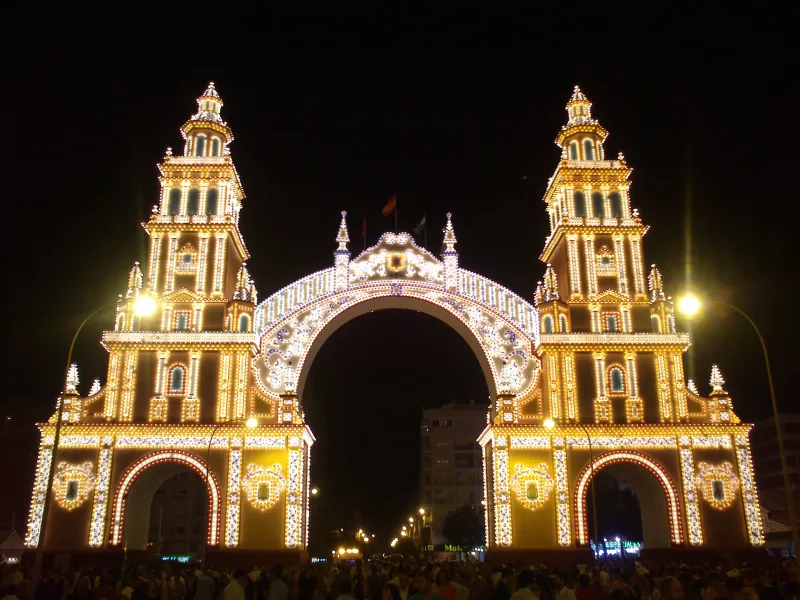
Feria de Abril Itinerary
How to plan days and nights at Seville's Feria de Abril: understanding the casetas and how to get inside one, what to wear, when the fairground comes alive, the daytime horse paseo, the rides, and how to fit ordinary sightseeing around the fair.
Read guideMore in Where to Stay
6
Alameda de Hércules Guide
Seville's most easygoing, creative quarter: the long tree-lined Alameda boulevard, its bars, cafés and live-music nights, brunch culture, apartments and bohemian energy — and who should choose it as a base.
Read guide
Alfalfa & Encarnación Guide
Alfalfa and Encarnación are the old town's tapas-and-nightlife engine: a dense pocket of bars and plazas under the Setas, full of central apartments and walk-home-after-dinner energy.
Read guide
Barrio Santa Cruz Guide
Stay, walk, eat and sightsee in Barrio Santa Cruz — Seville's atmospheric old Jewish quarter, wrapped tight around the cathedral and the Alcázar, all whitewashed lanes, tiled patios and orange trees.
Read guide
Best Area to Stay in Seville First Time
The simplest hotel-area decision guide for a first Seville visit: where to base yourself for the icons, the tapas and the evening paseo, and how to choose between Santa Cruz, El Arenal, Centro and Alfalfa without overthinking it.
Read guide
Best Boutique Hotels in Seville
A guide to Seville's smaller, stylish hotels — the patio houses, rooftop-pool conversions and design-led stays with real neighbourhood character — including which areas suit which mood, the trade-offs of historic buildings, and what to confirm before you book.
Read guide
Best Budget Hotels in Seville
Where to save on a Seville hotel without losing too much time, shade or transport convenience: which neighbourhoods give the best value, when budget rooms make sense, and the trade-offs to watch in the hot months and festival weeks.
Read guide