
Feria de Abril Itinerary
How to plan days and nights at Seville's Feria de Abril: understanding the casetas and how to get inside one, what to wear, when the fairground comes alive, the daytime horse paseo, the rides, and how to fit ordinary sightseeing around the fair.
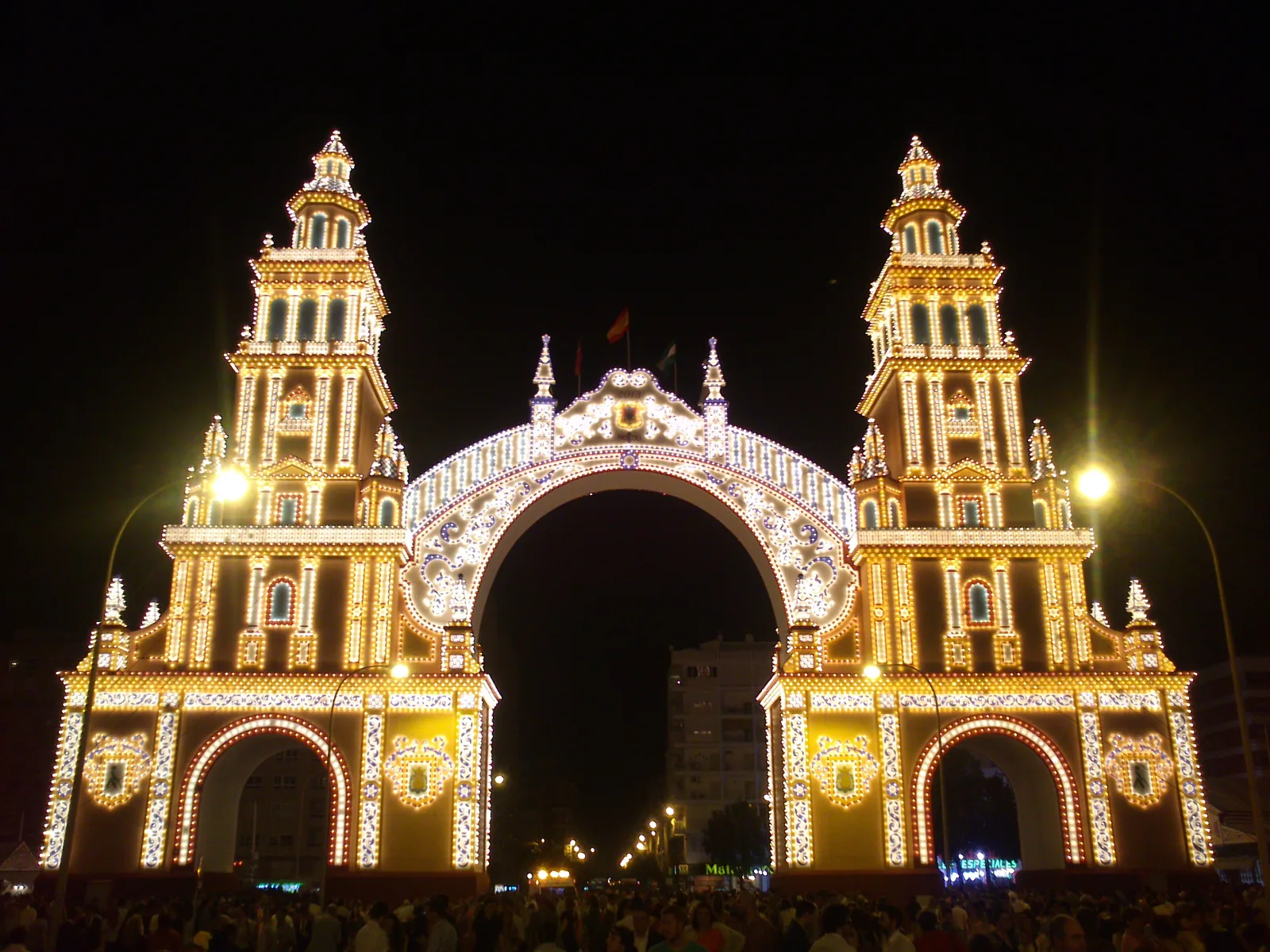
Photo: Agustín Macías / Wikimedia Commons · CC BY-SA 3.0
- ✓Feria de Abril usually falls a week or two after Semana Santa, so the dates move every year — confirm them before booking. The fair runs roughly a week, from a Monday-midnight lighting of the portada through to the following Sunday.
- ✓The fairground (the Real de la Feria) sits across the river in Los Remedios — a temporary city of striped tents called casetas, most of them private, strung with paper lanterns.
- ✓The single biggest thing to understand: most casetas are private, belonging to families, clubs and businesses. Getting inside the fun depends on knowing someone, a public caseta, or a tour.
- ✓There are two Ferias in a day: the elegant daytime horse-and-carriage paseo, and the long, loud, dancing night. They feel completely different.
- ✓Dress the part if you can — many women wear the traje de flamenca and men dress smartly — but it is not required to enjoy the fair.
What the Feria is, and what catches visitors out
Feria de Abril — the April Fair — is Seville's great explosion of joy, the counterweight to the solemnity of Semana Santa a couple of weeks earlier. For roughly a week, the city builds a temporary town across the river in the Los Remedios district: the Real de la Feria, a grid of streets lined with hundreds of casetas — striped canvas marquees — strung overhead with thousands of paper lanterns (farolillos), entered through a vast, illuminated gateway called the portada that changes design every year. Inside, there is dancing (the sevillanas, the fair's own folk dance), sherry and rebujito (a refreshing mix of sherry and soda), food, music and celebration from afternoon until deep into the night, every day of the fair.
Here is the thing nobody tells first-time visitors, and it is the most important fact about planning a Feria trip: the vast majority of the casetas are private. They belong to families, groups of friends, social clubs, trade associations and companies, and you cannot simply walk into them — entry is by invitation or membership. This is what catches people out: they imagine wandering the fairground dropping into tents at will, and instead find themselves outside a row of closed, members-only marquees. The good news is that there are ways in (covered below), and the fairground's public spaces are lively and free to roam. But go in understanding the structure, and you will have a far better time. As always, confirm the exact dates for your year first — the fair moves with Semana Santa, which moves with Easter.
Getting inside the fun: the caseta question
Since most casetas are private, the central planning question is how you will actually experience the fair from the inside rather than from the street. There are a few honest routes in. The simplest is an invitation: if you know a local, or a friend of a friend, or someone connected to a club or company with a caseta, an invitation is the golden ticket — Sevillanos are warmly hospitable to invited guests. Failing that, look for the public casetas: there are a number open to anyone, typically run by the city, political parties, unions or districts, and these are where unconnected visitors can step inside, get a drink and a plate of food, and watch or join the dancing. They are busier and less intimate than a private caseta, but they are genuinely fun and they are open to you.
A third route is an organised Feria experience or tour, which some local operators run — these can include access to a caseta and a guide to explain what you are seeing, and for a visitor with no local connections they can be the difference between watching the fair and being part of it. Verify what any such tour actually includes before booking.
If none of these come together, do not despair: the public areas of the fairground are a spectacle in themselves, and a great deal of Feria life happens out in the lanes between the casetas — the strolling crowds in their finery, the music spilling out, the horses and carriages, the food stalls. You can have a wonderful time simply walking the Real and soaking it up, then enjoying the funfair at the far end.
- Private casetas (most of them): entry by invitation or membership only — a local connection is the best way in.
- Public casetas (city, district, union, party): open to anyone, livelier and busier — the realistic option for unconnected visitors.
- Organised Feria experiences/tours: may include caseta access and a guide; verify what is included before booking.
- The open lanes and funfair: free to roam and a spectacle in their own right if you have no caseta access at all.
The daytime Feria: the horse-and-carriage paseo
The fair has two distinct lives in a single day, and a good plan samples both. The daytime Feria, broadly from around midday through the afternoon, is the elegant one. This is the hour of the paseo de caballos — the parade of horses and carriages — when riders in traditional short jackets and wide-brimmed hats, often with a woman in flamenca dress riding side-saddle behind them, and beautifully turned-out horse-drawn carriages process slowly through the fairground's avenues. It is a graceful, photogenic, almost aristocratic spectacle, and watching it unfold along the broad central lanes is one of the great pleasures of the fair.
Daytime is also when many people lunch in the casetas, when families with children are out in force, and when the whole scene is bathed in spring light rather than lantern-glow. If you have any kind of caseta access, a long midday lunch inside one — sherry, fried fish, jamón, the dancing starting up — is the quintessential daytime Feria. If you do not, the paseo and the public casetas fill the afternoon happily. Note that the horse parade typically gives way to the night as the carriages clear out in the early evening, so time your visit if the horses are what you have come to see.
The night-time Feria: lanterns, sevillanas and rebujito
Then, as dusk falls and the thousands of farolillos are lit, the fair transforms. The night-time Feria is the loud, joyful, dancing one — and it goes on until the small hours, every single night of the week. The casetas fill, the sevillanas strike up, the rebujito flows, and the whole Real becomes a swirl of music, movement and light. The opening night sets the tone: the fair traditionally begins with the alumbrao, the Monday-midnight switching-on of the portada lights, a hugely anticipated moment that officially lights the fair.
A night at the Feria is a marathon. Dinner happens late and stretches on; the dancing builds through the night; and the energy does not flag until dawn approaches. Pace yourself accordingly — eat properly, take the rebujito gently (it goes down easily and adds up faster than you think), and accept that a real Feria night is a late one. If you are in a public caseta, the night is when they are at their most fun and most crowded. If you are simply walking the lanes, the lantern-lit fairground after dark is unforgettable even from the outside, and the funfair at the Calle del Infierno end blazes with rides and noise for anyone with energy left.
- The fair officially begins with the alumbrao, the Monday-midnight lighting of the portada — a moment worth catching if your dates allow.
- Nights run until the small hours every day of the week; plan to dine late and pace yourself.
- Rebujito (sherry and soda) is the fair's drink — refreshing and deceptively easy, so go gently.
- Learn or watch the sevillanas — the fair's folk dance, danced everywhere once the night gets going.
- The funfair (Calle del Infierno) at the far end is the place for rides and is great for families and teens.
What to wear and how to behave
Feria is the one time of year when dressing up genuinely adds to the experience. Many Sevillanas wear the traje de flamenca — the flounced, polka-dotted flamenco dress, the only regional costume in Spain that follows fashion and changes a little each year — and men often wear smart traditional or simply sharp clothes. You are under no obligation to dress up to enjoy the fair, and plenty of visitors do not. But if you embrace it even a little — a flower in the hair, a smarter outfit than your usual sightseeing clothes — you will feel more part of the occasion and less like an onlooker, and locals respond warmly to visitors who make the effort. If you want a full traje, they can be bought or sometimes rented in the city, though good ones are an investment; verify costs and availability locally.
On behaviour: the Feria is welcoming but it has its codes. A private caseta is essentially someone's hospitality, so do not try to push into one uninvited or hover at the doorway. In public casetas, buy your drinks and food and join in the spirit of the place. Be a gracious guest if you are invited into a private tent — accept the sherry, attempt the dancing, and enjoy the warmth. And treat the horses and their handlers with respect and distance during the paseo.
- Optional but lovely: the traje de flamenca for women, smart traditional dress for men — embracing it makes you part of the day.
- Do not enter a private caseta uninvited; if invited, be a warm, appreciative guest.
- In public casetas, buy your drinks and food and join the dancing rather than just watching.
- Give the horses and carriages space during the paseo.

Fitting the rest of Seville around the fair
The Feria is across the river and largely an afternoon-and-night affair, which leaves the mornings — and the daytime, if you are saving your energy for the nights — free for ordinary sightseeing. This is a real advantage over Semana Santa: the city's monuments largely run as normal during Feria, and the central tourist quarter is, if anything, a little quieter on the busiest fair afternoons because so many locals are over at the Real.
So structure your trip as two layers. Use the mornings for the classic Seville you came to see: the Real Alcázar and its gardens, the Cathedral and Giralda, a Santa Cruz wander, Plaza de España, the Setas. Save the late afternoons and nights for the fairground. A sensible Feria day might be a monument in the cool morning, a long lunch and a rest, then over to the Real for the evening paseo and the lantern-lit night. Just remember the geography — the fairground is across the river in Los Remedios — and factor in the crowds and transport pressure of getting there and back, especially late at night. Confirm current public-transport arrangements for the fair, which are often boosted for the week.
Logistics, money and a sample Feria day
A few practical notes. The Real de la Feria is across the Guadalquivir in Los Remedios; getting there means a walk over the river, a taxi, or public transport, all of which come under pressure during the fair, especially as the night winds down toward dawn — build patience into the journey home. Carry cash, as casetas and stalls often prefer it. Food and drink inside casetas are paid for like any bar; budget for it, and remember the late, long nights add up. Keep your belongings secure in the crowds. And mind the dust: the Real is a sand-floored fairground, so flat, sturdy footwear beats anything delicate.
Pulling it together, here is the shape of a good Feria day. Late morning: a classic monument in the cool, booked ahead. Midday into early afternoon: lunch — in a caseta if you have access, otherwise in the city — and a deliberate rest to bank energy for the night. Late afternoon: cross to the Real for the horse-and-carriage paseo and the daytime fairground. Evening: stay for the alumbrao glow as the lanterns light, find a public caseta or your invitation, eat late, drink rebujito gently, and dance the sevillanas until you can dance no more. Then the long, happy walk or ride home. Do that even once and you will understand why Seville lives for this week all year.
- Carry cash; casetas and stalls often prefer it.
- Wear flat, sturdy shoes — the fairground floor is sand and dust.
- Expect transport and taxis to be under heavy pressure late at night; build in patience and verify boosted services for the week.
- Keep valuables secure in dense crowds, and pace your food, drink and energy across a long night.
Where to stay, and is Feria worth the trip?
Accommodation during Feria fills up and prices climb, much as during Semana Santa, so book months ahead. The key tension is between proximity to the fairground and proximity to the sights. Los Remedios, the district that hosts the Real, puts you within walking distance of the fair — a real advantage for the late-night returns — but it is a quieter residential area a little removed from the main monuments. A central base, by contrast, keeps you among the sights and the everyday city but means a longer trip to and from the fairground each night. Neither is wrong; choose according to whether the fair or the city is your centre of gravity, and weigh the nightly transport question heavily, because getting home from the Real in the small hours is the part that wears people down.
And the honest question: is a Feria trip worth it for a visitor with no local connections? For many, yes — even from the public casetas and the open lanes, the spectacle, the dresses, the horses, the lanterns and the sheer collective joy are unlike anything else, and it is a window into the soul of the city. But manage expectations. If you arrive imagining you will breeze into glamorous private tents and dance the night away with locals, the reality of the private-caseta system may disappoint. Come instead for the atmosphere, the daytime paseo, the lit-up nights and whatever access you can arrange, and you will have a wonderful time. If full immersion matters to you, invest the effort in finding an invitation or a genuine experience that includes caseta access before you travel — that single piece of planning makes the biggest difference of all.
- Book accommodation months ahead — Feria fills the city and lifts prices.
- Los Remedios is closest to the fairground; a central base keeps you among the sights — weigh the nightly transport home.
- Manage expectations around the private-caseta system; come for the atmosphere, the paseo and the lights.
- If full immersion matters, arrange an invitation or a caseta-access experience before you travel.
Eating and drinking your way through the fair
Food and drink are central to the Feria, not an afterthought, and knowing what to order makes you feel part of it. The fair's signature drink is rebujito — chilled dry sherry (typically a manzanilla or fino) mixed with lemon-lime soda, served by the jug and poured into small plastic cups, refreshing and dangerously easy on a warm afternoon. Beyond it you will find the rest of the sherry family, beer, and the soft drinks that keep families going through the long days. Pace the rebujito: it is light and moreish, and a long Feria night rewards moderation over enthusiasm.
On the food side, the casetas and stalls serve classic Andalusian fare built for grazing through hours of dancing: fried fish (pescaíto frito is so associated with the fair that the opening night is sometimes called the noche del pescaíto), jamón and cheese, tortilla, croquetas, and plates of olives and other tapas. Eating little and often across the night, rather than one big meal, suits the rhythm of the fair perfectly. If you are in a public caseta you order and pay as at any bar; in a private one as an invited guest, let your hosts lead. Either way, lining your stomach properly is the difference between a glorious Feria night and an early, wobbly exit — eat as you drink, and the fair will carry you happily through to the small hours.
- Drink rebujito — sherry with lemon-lime soda, served by the jug — but pace it; it adds up fast.
- Eat the classic fair fare: fried fish (pescaíto frito), jamón, cheese, tortilla, croquetas and tapas, little and often.
- The opening is sometimes called the noche del pescaíto for the fried fish traditionally eaten that night.
- Eat as you drink across the long night — it is the secret to lasting until dawn.

Feria de Abril Guide
Everything a first-timer needs to understand Seville's April Fair: when it falls, what the fairground and the casetas are, the private-caseta system and how to get inside the fun, the daytime horse paseo and the lantern-lit nights, what to wear, what to eat and drink, where to stay, and how to fit the city around the fair.
Read guide
Where to Stay for Feria de Abril
The best areas to base yourself for Feria de Abril: how the fairground location reshapes the usual hotel advice, the trade-off between walking distance and old-town atmosphere, what the noise and price pressure are really like, and why you must book far ahead.
Read guide
Los Remedios Guide
A calm, residential grid across the river in southwest Seville: next door to the Feria fairground, walkable to Triana and the Guadalquivir, with everyday prices — and exactly when Los Remedios makes sense as a base.
Read guideMore in Itineraries
62 Days in Seville Itinerary
A balanced two-day Seville plan: the UNESCO icons and Plaza de España on day one; Triana, the Setas, a market and a flamenco night on day two — built around the ticket slots and the afternoon heat.
Read guide
3 Days in Seville Itinerary
A complete three-day Seville itinerary: the UNESCO icons and Plaza de España; Triana, the Setas and flamenco; then a quieter palace, a market morning, a museum and slow golden-hour river time.
Read guide
4 Days in Seville Itinerary
A four-day Seville itinerary: the icons, Triana and flamenco, a quieter palace and a museum — then a fourth day for one Andalusian day trip, Córdoba's Mezquita above all, or a deliberate day off.
Read guide
Accessible Seville Itinerary
A realistic, romantic accessible route through Seville built on smoother surfaces, level entrances, lifts, taxis and the tram — with honest notes on cobbles, ramps, rest stops and the heat, paced so the city stays a pleasure rather than an obstacle course.
Read guide
Heat-Smart Summer Seville Itinerary
How to actually enjoy Seville in summer: a day built around early starts, a long midday break, pools and shade in the worst hours, and the long warm evenings the city was made for — with a sample three-day plan.
Read guide
Luxury Weekend in Seville
A high-end two-day Seville plan — palace hotels, private guides for the Alcázar and cathedral, rooftop sunsets, spa afternoons, fine dining and a flamenco night, all at an unhurried pace.
Read guide