
White Villages from Seville
How to do the Pueblos Blancos as a day trip from Seville: which white villages to choose — Arcos, Zahara, Grazalema, Setenil, Olvera — whether to drive or take a tour, and how to combine them with Ronda.

Photo: Alexis Presa / Unsplash

- ✓The Pueblos Blancos are a scatter of whitewashed hill villages across the Cádiz and Málaga sierras — there is no single 'white village', so the day is about choosing a route, not a destination.
- ✓Driving gives you the freedom to string two or three villages together; an organised tour spares you the mountain roads and the planning, and usually pairs the route with Ronda.
- ✓Standout names: Arcos de la Frontera on its cliff, Zahara de la Sierra above its reservoir, mountain-locked Grazalema, and the cave-houses of Setenil de las Bodegas.
- ✓It's a scenic, slow, road-trip kind of day — the joy is the views, the winding roads and the village squares, not ticking off monuments.
- ✓From Seville it's a committed day out (roughly 1.5–2.5 hours each way depending on the village; verify with live traffic), so pick a focused route rather than trying to see everything.
What the white villages actually are
The Pueblos Blancos — the 'white villages' — are a loose constellation of small towns scattered through the mountains of Cádiz province and the western edge of Málaga, most of them within or around the Sierra de Grazalema natural park. Their shared signature is obvious from a distance: tightly packed houses washed a brilliant lime-white, terracotta roofs, and a setting that's almost always dramatic — clinging to a cliff, crowning a crag, or spilling down a hillside beneath a ruined Moorish castle. The whitewash isn't just pretty; it reflects the fierce Andalusian sun and keeps the thick-walled houses cool.
Crucially, there is no one 'White Village' to drive to. Planning this trip means choosing which of the villages to link into a route, and accepting that the experience is the journey as much as the stops. This is Andalusia's great scenic drive: hairpin mountain roads, sweeping sierra views, sleepy plazas, and the slow rhythm of villages where not a great deal happens and that's entirely the point. Go for the landscape, the light and the atmosphere — not for a checklist of sights.
- A cluster of whitewashed hill towns across the Cádiz and Málaga sierras, not a single place.
- Most sit in or around the Sierra de Grazalema natural park.
- The drive and the views are the experience as much as any one village.
- Best for: scenery lovers, road-trippers, photographers and slow travellers.
At a glance
A quick-reference card before the detail. Distances and times vary a lot by which villages you pick, so treat the numbers as a guide and verify with live traffic and current tour schedules.
- Distance from Seville: roughly 90–130 km to the main villages; about 1.5–2.5 hours each way by road (verify).
- How to do it: self-drive for flexibility, or an organised tour for ease — most tours pair the villages with Ronda.
- Star villages: Arcos de la Frontera, Zahara de la Sierra, Grazalema, Setenil de las Bodegas, Olvera.
- Time needed: a full day; realistically two or three villages rather than the whole network.
- Terrain: winding mountain roads and steep, cobbled village streets — comfortable shoes, and a head for hairpins if you drive.
- Best seasons: spring and autumn for green hills and kind temperatures; summer is hot but manageable at altitude.
- Bring: water, sun cover, a full tank if driving, and a camera — the views are the whole point.
The villages worth your day
You can't see them all in a day, so here are the names that earn a place on a Seville-based route. Arcos de la Frontera is the grand gateway: a large white town dramatically perched along a sandstone ridge above a river bend, with a knockout viewpoint over the plain and a tangle of steep lanes around its churches. It's the closest of the classic villages to Seville and a natural first or last stop.
Zahara de la Sierra is the postcard: a cluster of white houses below a castle keep on a pinnacle of rock, overlooking a startlingly turquoise reservoir — one of the most photographed scenes in Andalusia. Grazalema, deeper in the mountains, is the lush, cool heart of the natural park, famous as one of the rainiest spots in Spain and beautifully green for it. Setenil de las Bodegas is the oddity everyone remembers: a village built into and under a rock overhang, with streets and bars tucked beneath the bulging cliff. Olvera, crowned by its church and castle, gives you another of those vertiginous hilltop silhouettes. Pick a cluster that links together geographically rather than zig-zagging the sierra.
- Arcos de la Frontera: cliff-top town, big viewpoint, closest to Seville — a natural anchor.
- Zahara de la Sierra: castle, white houses and a turquoise reservoir — the iconic shot.
- Grazalema: green, cool mountain village at the heart of the natural park.
- Setenil de las Bodegas: streets built under a rock overhang — unforgettable.
- Olvera: hilltop church-and-castle silhouette to the north of the range.
Driving versus taking a tour
This is the decision that shapes the whole day. Driving yourself is the romantic choice and, for many, the right one: you set the pace, stop at viewpoints whenever the light is good, and link the villages in whatever order suits you. A rental car from Seville gives you total freedom, and the mountain roads — while winding — are scenic rather than frightening for a confident driver. The trade-offs are the hairpins, the tight village parking (park at the edge and walk in), and the planning legwork of plotting a sensible loop.
An organised day tour removes all of that. Someone else drives the mountain roads, the route is pre-planned, and you simply enjoy the views and the stops — and most white-village tours from Seville cleverly bundle in Ronda, giving you the region's headline town plus a village or two in a single day. The cost is flexibility: you stop where and for how long the tour decides, and you'll see fewer villages than a determined self-driver could. If you're nervous about mountain driving, short on time, or just want a no-effort day, the tour wins. If you love a road trip and want the freedom to linger, drive.
- Self-drive: maximum freedom and viewpoints, but you handle the hairpins, parking and planning.
- Tour: no driving, no planning, and Ronda usually included — but a fixed route and fewer stops.
- Park at the edge of villages and walk in; the centres are steep and tight.
- Choose by temperament: road-trippers drive, easy-day travellers take the tour.

Combining the villages with Ronda
For most visitors the smartest version of this trip pairs the white villages with Ronda, and it's worth understanding why. Ronda — the spectacular town split by the Tajo gorge and spanned by its famous Puente Nuevo — is itself one of the Pueblos Blancos, just by far the largest and most monumental. Geographically it sits at the eastern end of the village country, so a route that runs out through Arcos, Zahara, Grazalema or Setenil and finishes at Ronda (or vice versa) flows naturally and gives you both the intimate villages and the headline drama in one day.
If you only have a single day and want the most for it, this combination is hard to beat: the small white villages supply the atmosphere and the photographs, and Ronda supplies the wow. The catch is pace — fitting Ronda and two or three villages into a day from Seville is a long, full day with limited time in each, so don't overload it. If Ronda is your real priority, give it the lion's share of the day and treat a village or two as the scenic bonus; if the villages are the draw, keep Ronda short or save it for its own trip.
- Ronda is itself the biggest of the white villages, at the eastern end of the range.
- A village-plus-Ronda loop gives you intimacy and headline drama in one day.
- It's a long, full day — don't try to add more than two or three villages around Ronda.
- Decide your priority: Ronda-led or village-led, and weight the day accordingly.
Suggested routes from Seville
Rather than trying to thread the whole network, pick a cluster that links together. A western, gentler loop starts at Arcos de la Frontera — the closest and easiest — then climbs to Zahara de la Sierra for its castle-and-reservoir view and on to Grazalema in the cool heart of the park. This route keeps the villages relatively close and is manageable as a day, with the drives themselves doing much of the scenic work.
An eastern, more committed route aims for the Setenil-and-Ronda corner: the cave-streets of Setenil de las Bodegas paired with Ronda's gorge make a compact, high-impact day, with Olvera's hilltop castle as a possible add-on on the way. Whichever you choose, start early to beat both the heat and the day-tour coaches, build in unhurried time for at least one long viewpoint and one slow village square, and keep the village count honest — two or three done well beats five done in a blur.
- Western loop: Arcos → Zahara → Grazalema — gentler, closer, very scenic.
- Eastern run: Setenil → Ronda (+ optional Olvera) — compact and high-impact.
- Start early to beat the heat and the tour coaches into the villages.
- Aim for two or three villages, not five — depth beats a checklist here.
Practical tips and seasons
Spring and autumn are the loveliest seasons in the sierra: the hills are green, the temperatures kind, and the light clean for photography. Summer is hotter, though the altitude takes some of the edge off the worst of the Seville heat, and winter can be cool, misty and atmospheric in the higher villages — Grazalema in particular. Whenever you go, the villages are walked on foot up steep, cobbled, often stepped streets, so wear proper shoes and carry water.
If you drive, fill the tank before you head into the mountains, where fuel stops thin out, and park on the edge of each village rather than fighting the narrow centres. Eat where the locals do — a long lunch in a village square, with mountain cheese, cured meats and a slow glass, is part of the day's pleasure. As always, confirm any tour times, prices and seasonal road or village access close to your trip, since mountain conditions and operator schedules shift through the year.
- Best seasons: spring and autumn for green hills and easy temperatures.
- Wear sturdy shoes for steep cobbled streets; carry water and sun cover.
- Driving: full tank before the mountains, and park at the village edge.
- A long village lunch is part of the trip — don't rush it.
- Verify tour times, prices and seasonal road access before you go.

Ronda Day Trip from Seville
How to do Ronda from Seville: the Puente Nuevo and El Tajo gorge, the clifftop viewpoints and gorge walks, train versus organised tour, pairing it with the white villages, who should go and who shouldn't, and how to plan around the heat and the distance.
Read guide
Best Day Tours from Seville
When a guided day tour beats doing it yourself — and which ones are genuinely worth it. A comparison of organised day trips from Seville to Córdoba, Ronda and the white villages, Cádiz, Jerez, Itálica and Doñana, by who they suit, what they solve and when you're better off taking the train alone.
Read guide
Best Day Trips from Seville
Seville is the best base in Andalusia for day trips — Córdoba's mosque-cathedral, Cádiz on the Atlantic, Ronda's gorge, Jerez sherry, the Roman ruins of Itálica and the white villages — compared by travel time, effort, season and who each one suits.
Read guideMore in Day Trips
6
Best Beaches Near Seville
Seville has no beach of its own, but the Atlantic is closer than you think. A practical guide to the best beaches within reach — Cádiz, the Costa de la Luz, Huelva, Matalascañas and the Doñana coast — with how to get there by train, bus or car, when to go, and how to turn a hot Seville day into a sea breeze.
Read guide
Cádiz Day Trip from Seville
How to do Cádiz from Seville: a relaxed train to one of Europe's oldest cities, with a sea-wrapped old town, golden cathedral, fresh seafood and city beaches — plus the timing, the weather watch and when Cádiz beats another inland culture day.
Read guide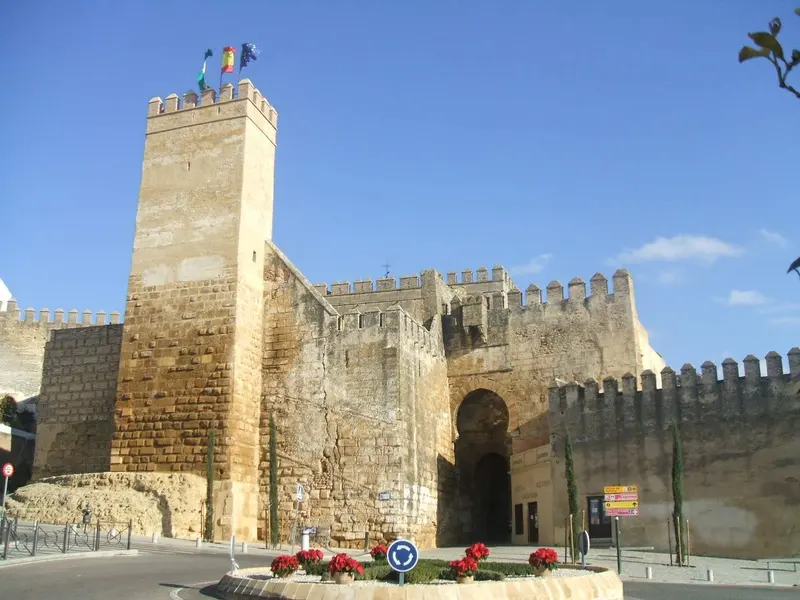
Carmona Day Trip from Seville
How to do Carmona from Seville: the Roman gates and necropolis, the clifftop viewpoints over the Vega, a parador lunch with a view, bus timing, and why this hilltop town makes one of the easiest small-town escapes from the city.
Read guide
Córdoba Day Trip from Seville
How to do Córdoba from Seville: the fast high-speed train versus a tour, booking the Mezquita-Catedral, a relaxed route through the Judería, patios and Roman bridge, and the heat-and-timing tradeoffs that make or break the day.
Read guideCórdoba or Cádiz from Seville?
Both Córdoba and Cádiz are easy, train-friendly day trips from Seville — but they're completely different days out. A clear-headed comparison by travel time, season, heat, food, scenery and the kind of traveller you are, so you can pick the right one (or sequence both).
Read guide
Doñana Day Trip from Seville
Whether Doñana works as a day trip from Seville: the wetlands and wildlife you'll actually see, the seasons that matter, why you can't drive into the park yourself, and how to build a realistic day around an official 4x4 tour.
Read guide