
One Day in Seville Itinerary
The best one-day Seville route, hour by hour: the Real Alcázar at opening, the cathedral and Giralda, a Santa Cruz wander, Plaza de España in the soft light and a tapas evening — with a built-in afternoon heat break.

Photo: Andrea Huls Pareja / Unsplash
- ✓Book the Real Alcázar and the Cathedral in advance and take the first entry slot of the day — it is the single decision that makes one day work.
- ✓Morning: Alcázar, then the Cathedral and the Giralda climb, all within a five-minute walk of each other.
- ✓Midday: lunch and a slow wander through Barrio Santa Cruz, then a deliberate break through the hottest hours.
- ✓Late afternoon and evening: Plaza de España and María Luisa Park in the kinder light, then a tapas crawl after dark.
- ✓Everything here is walkable and flat; this is a plan about timing and ticket slots, not transport.
Can you really see Seville in one day?
Yes — more of it than you would expect, and well, provided you do one thing: book the Real Alcázar and the Cathedral before you arrive and take the earliest entry slots you can get. Seville's two unmissable monuments sit five minutes apart, ringed by the lanes of Barrio Santa Cruz, with Plaza de España a short walk to the south-east. That tight geography is what makes a single day feel generous rather than frantic. You will not reach Triana or sit through a full flamenco show, but you will stand inside the largest Gothic cathedral on earth, walk a thousand years of palace history, lose an hour in the prettiest old quarter in Andalusia, and eat extremely well.
The plan below is built for a first-timer with a full day — arriving the night before or very early, leaving the next morning. If you are here on a day trip from the coast or from Córdoba, simply compress the edges. The shape stays the same all year: monuments in the cool of the morning, a real break through the worst of the afternoon, and the open-air sights and tapas saved for the long Andalusian evening.
At a glance: the one-day plan
The whole day in one card. Treat the times as a rhythm rather than a timetable, and shift everything earlier in high summer to claim more of the cool morning.
- Before you go: book the Alcázar and Cathedral online, first slots; confirm hours on the official sites.
- Early morning: Real Alcázar at opening — rooms first, then the gardens before the groups arrive.
- Late morning: Cathedral and the Giralda climb, plus the orange-tree courtyard.
- Lunch: tapas in or just beyond Santa Cruz, then a slow wander through the lanes.
- Hottest hours: a deliberate break — a long lunch, your hotel, or a cool stop like the Archivo de Indias.
- Late afternoon: Plaza de España and a shaded loop of María Luisa Park.
- Golden hour: the river and the Torre del Oro, or a rooftop drink with a Giralda view.
- Evening: a tapas crawl after dark — two or three small plates per bar, then move on.
Morning: the Real Alcázar at opening
Start your day at the Real Alcázar, and start it at the very first entry slot. This is the most important move of the whole itinerary. The Alcázar is a layered royal palace — Almohad foundations reworked by Christian kings into a Mudéjar masterpiece of carved plaster, tiled walls and cool, water-threaded courtyards — and it is transformed by emptiness. Arrive as the doors open and you can stand alone in the Patio de las Doncellas with its long reflecting pool, look up at the gilded ceiling of the Salón de Embajadores without a single raised phone in the way, and have the sunken gardens almost to yourself before the first tour groups file in.
Walk the rooms first while they are quiet, then give the gardens the time they deserve: the palm-shaded paths, the Mercury pond, the grotto gallery, the long planted terraces that feel like a different, greener city. Allow ninety minutes as a minimum; tile-lovers and gardeners will happily spend two hours. Buy your ticket online in advance for a timed slot — turning up to queue on a one-day visit is a gamble you cannot afford, and prices and hours are worth confirming on the official site close to your trip.
Late morning: the Cathedral and the Giralda
From the Alcázar it is a five-minute walk to the Cathedral, and you will already be on the right side of the morning to climb the Giralda before the heat builds. Seville's cathedral is the largest Gothic church in the world by volume, a vast, cool stone interior built on the footprint of the city's great mosque. Inside, the scale is the point: the towering nave, the gilded main altarpiece, the monument said to hold the remains of Christopher Columbus, and a treasury of art in the side chapels. Give yourself room to wander rather than rushing the loop.
The Giralda, the bell-tower attached to the cathedral, is its most famous silhouette — a former minaret topped with a Renaissance belfry. The climb is famously kind: instead of stairs, a series of broad ramps spirals up, originally built so a rider could ascend on horseback, which makes it manageable for most fitness levels. From the top you get the definitive Seville view, rooftops to the horizon and the Alcázar gardens laid out below. Before you leave, step into the Patio de los Naranjos, the orange-tree courtyard, a survivor of the mosque and a gorgeous, shaded pause. A combined cathedral-and-Giralda ticket is the norm; book ahead and check current pricing on the official site.
Lunch and a slow wander through Santa Cruz
By now it is the middle of the day and you have earned a long, unhurried lunch. The lanes of Barrio Santa Cruz — the old Jewish quarter that wraps around the cathedral and the Alcázar — are the obvious place for it: a maze of whitewashed alleys, tiled fountains, jasmine-draped patios and tiny squares that open up just when you think you are lost. It is also, frankly, the most tourist-trodden quarter in the city, so for the best food it pays to step a street or two beyond the most photographed corners, or to aim for a bar that locals still use.
Eat the Sevillian way: stand at the bar or grab a small table, order two or three tapas and a cold drink, and don't over-order — the joy is in grazing. This is also the moment to slow right down and simply walk. Santa Cruz is best experienced as aimless wandering rather than a checklist: follow the shade, peer into open patios, find the Plaza de Doña Elvira or the Plaza de los Venerables, and let the quarter set the pace. If you have an hour to spare and the heat is rising, the Archivo de Indias — the cool, free-to-enter archive of Spain's empire, just by the cathedral — makes a perfect, calm indoor stop.
The afternoon heat break — non-negotiable in summer
If you are visiting between roughly June and September, the early afternoon is not the time to be marching around in the open. Seville's city centre runs as hot as anywhere in Europe, with afternoon highs often in the mid-thirties Celsius and higher in a heatwave — always check the AEMET forecast close to your dates. So build a genuine break into the day. Stretch lunch out, retreat to your hotel if you have one nearby, or duck into something cool and worthwhile: the Archivo de Indias, a small museum, an air-conditioned café over a long coffee and a granizado.
This is not lost time — it is the secret to enjoying a Seville day rather than enduring it. The locals disappear from the streets in these hours for good reason, and following their lead means you re-emerge for the evening with energy to spare. Outside high summer you can compress or skip this break, but even on a mild day a sit-down pause here keeps the afternoon from sagging.
- Hydrate constantly and carry sun cover — a hat and water are not optional in summer.
- Cool indoor options near the centre: Archivo de Indias, the Fine Arts Museum, the Flamenco Museum.
- A long café stop with a granizado or an ice cream is a perfectly legitimate sightseeing activity here.
- Verify the day's forecast; in a heatwave, lean even harder on the break and the evening.

Late afternoon: Plaza de España and the park
As the worst of the heat lifts and the light turns golden, walk south-east to Plaza de España — Seville's grandest open-air set piece and, conveniently, free to enter and open year-round. Built for the 1929 Ibero-American Exposition, it is a vast half-moon of tiled bridges and painted alcoves, one for every province of Spain, wrapped around a curving canal you can row in a little boat. Late afternoon is one of the best times to be here: the low sun warms the brick and ceramic, the crowds thin from their midday peak, and the whole plaza glows.
Right beside it lies María Luisa Park, a generous expanse of shaded paths, fountains, tiled benches and quiet corners that is the perfect cool-down after the open plaza. A slow loop here — past the lily ponds and the pavilions — is one of the loveliest free hours in the city, and a gentle way to let the day decompress before the evening picks up. If you have children with you, this stretch is a gift: room to run, ducks to find and boats to row.
Golden hour: the river, a rooftop, or both
With the day cooling and the light at its best, you have a choice for golden hour. One option is the Guadalquivir: walk back toward the river and along its banks past the Torre del Oro, the 13th-century watchtower that guarded the port, watching the water turn copper and Triana light up on the far side. The riverside is made for an unhurried evening stroll, and the bridges frame the sunset beautifully.
The other option, if you would rather toast the day from above, is a rooftop bar — several terraces in the centre look straight at the floodlit Giralda as it glows against the dusk. A cold drink with that view is one of Seville's defining pleasures, and a fitting reward for an early start. Reservations help at the popular terraces, especially in high season, so it is worth checking ahead. Either way, this is the seam of the day where the sightseeing softens into the evening.
Evening: a tapas crawl after dark
Seville dines late, and the evening tapas crawl is the perfect close to a one-day visit. The form is simple and sociable: don't sit down for a single big meal — instead, hop between bars, ordering a couple of small plates and a drink at each before moving on. A first stop for classic Andalusian dishes (salmorejo, spinach and chickpeas, fried fish, good Iberian ham), a second for something more modern, a third for a final glass — that is a proper Sevillian night out, and it lets you taste far more of the city's food than any one restaurant could.
If you would rather have a focus for the evening, two add-ons fit a one-day plan beautifully. A flamenco show — even a shorter, intimate one — gives the night a heart; many start late enough to follow an early dinner. Or simply keep wandering: the monuments are floodlit after dark, Santa Cruz takes on a softer, lamp-lit magic, and the streets stay alive long after they would have emptied at home. However you end it, you will leave having done something rare: seen Seville properly in a single, well-judged day.
Where to base yourself for a single day
If your one day in Seville comes with a night either side, stay inside the old town and you hand yourself extra time for free. The historic core — the compact triangle bounded by the river to the west, the Setas to the north, and the cathedral and Alcázar to the south — is flat, dense and walkable, so a central base means your day starts at the Alcázar's door rather than after a commute. Barrio Santa Cruz is the most atmospheric and the closest to the morning monuments; El Arenal is the calmer riverside option; Centro is the practical, well-priced middle. Any of them puts the whole plan within a fifteen-minute walk.
Sleeping centrally also lets you bookend a single day cleverly. Arrive the evening before and you can claim a first rooftop sunset and a tapas crawl before the official day even begins, which effectively turns one day into one-and-a-bit. Leave the morning after and you might squeeze in the orange-tree courtyard or a quiet river walk before your train. With only a day on the ground, those stolen edges are worth more than any optimisation of the day itself.
If your one day is a day trip or stopover
Plenty of people meet Seville on a day trip — from the coast, from Córdoba, or on a long layover between trains. If that is you, the shape of the plan holds but the edges compress. Arriving by high-speed train, you will land at Santa Justa station, a short taxi or bus from the centre; head straight for the Alcázar and Cathedral, having pre-booked timed slots so a queue cannot eat your limited hours. Skip the leisurely afternoon break — on a stopover you simply do not have the hours to spare — and instead keep moving steadily, pausing for a quick tapas lunch rather than a long one.
On a compressed day, prioritise ruthlessly: the Alcázar and the Cathedral are the two things you should not miss, with Santa Cruz and Plaza de España as the next tier if time allows. Leave a comfortable buffer to get back to the station — Seville's lanes are easy to lose track of time in — and confirm your return train and its platform in advance. Even a half-day handled this way leaves most people determined to come back for longer, which is no bad outcome.
- Pre-book the Alcázar and Cathedral for early, timed slots — non-negotiable on a tight day.
- Arriving by train: Santa Justa is a short taxi or bus from the centre.
- Prioritise: Alcázar and Cathedral first; Santa Cruz and Plaza de España if time allows.
- Skip the long afternoon break and leave a buffer to reach your return train.
- Verify monument hours and train times in advance — both change.
If you have a little more time
One day in Seville is a wonderful sprint, but it is, honestly, a sprint — and almost everyone who has it wishes they had given the city a second day. If your schedule has any flex at all, a single extra day is the best value upgrade you can make: it adds Triana across the river, a Setas sunset, a full flamenco night and the slow, in-between hours where the city is at its most charming. A third day turns the trip into a genuine stroll.
If your day in Seville is fixed, don't agonise — this plan is designed to leave you satisfied rather than rushed. But if you are still planning, read the longer itineraries before you lock anything in; they may change your mind about how long to stay.
One-day questions, answered
Is one day really enough? It is enough to see Seville's two great monuments, wander its loveliest quarter and eat extremely well — provided you book the Alcázar and Cathedral ahead and start early. What you trade away is the river, Triana and a full flamenco show, and the slow, in-between time that is half the pleasure of being here. Most people who do a single day leave wishing they had stayed two.
What should I skip if I'm short on time? If the day is tight, the things to drop are the Giralda climb (the cathedral interior alone is worth it) and the afternoon break, not the Alcázar or Plaza de España. On a true stopover, prioritise the Alcázar and the Cathedral above everything; Santa Cruz and Plaza de España are the next tier if time allows.
Do I need a guided tour for one day? No — this plan is entirely self-guided and the centre is small and walkable. A guide can add depth at the Alcázar or Cathedral if you love the history, but it is not necessary to have a great day. What is necessary is pre-booked, early-slot tickets for the two big monuments.
Can I add flamenco to a one-day visit? Yes. Many shows start late enough to follow an early tapas dinner, and even a shorter, intimate performance gives the evening a heart. Reserve ahead in high season. If you would rather keep the night loose, the floodlit monuments and a tapas crawl make a fine alternative.

Real Alcázar of Seville Guide
How to visit Seville's royal palace: what you're seeing, the rooms and gardens worth your time, when to go, which entrance to use, and how to dodge the crowds at Europe's oldest royal palace still in use.
Read guide
Seville Cathedral & Giralda Guide
How to visit Seville Cathedral and the Giralda: tickets, the ramped tower climb, the art and the Columbus tomb, the orange-tree courtyard, and how to pair it all with the Alcázar and Santa Cruz.
Read guide
Self-Guided Old Town Seville Walk
A walkable, self-guided loop through Seville's old town: from the Cathedral and Giralda along the Alcázar walls into Santa Cruz, out to the Arenal and river, then up through Centro to El Salvador, the Setas and tapas.
Read guideMore in Itineraries
6
2 Days in Seville Itinerary
A balanced two-day Seville plan: the UNESCO icons and Plaza de España on day one; Triana, the Setas, a market and a flamenco night on day two — built around the ticket slots and the afternoon heat.
Read guide
3 Days in Seville Itinerary
A complete three-day Seville itinerary: the UNESCO icons and Plaza de España; Triana, the Setas and flamenco; then a quieter palace, a market morning, a museum and slow golden-hour river time.
Read guide
4 Days in Seville Itinerary
A four-day Seville itinerary: the icons, Triana and flamenco, a quieter palace and a museum — then a fourth day for one Andalusian day trip, Córdoba's Mezquita above all, or a deliberate day off.
Read guide
Accessible Seville Itinerary
A realistic, romantic accessible route through Seville built on smoother surfaces, level entrances, lifts, taxis and the tram — with honest notes on cobbles, ramps, rest stops and the heat, paced so the city stays a pleasure rather than an obstacle course.
Read guide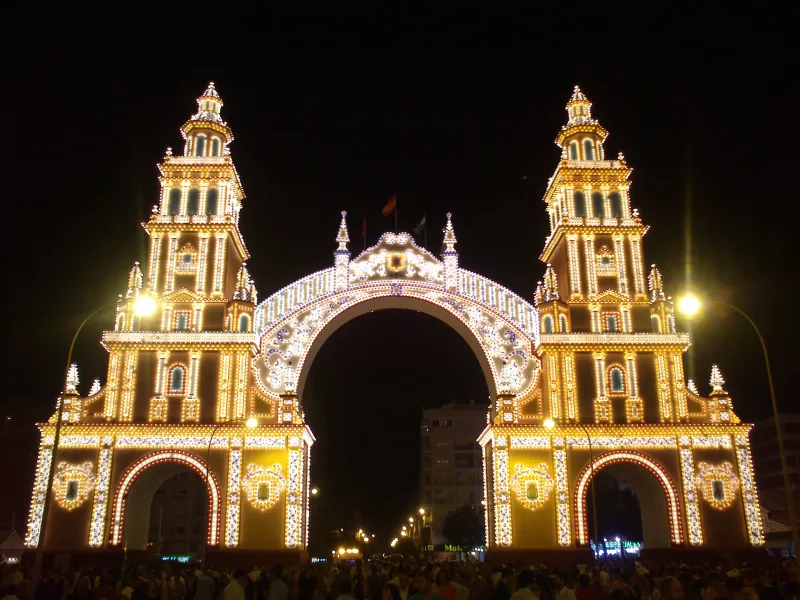
Feria de Abril Itinerary
How to plan days and nights at Seville's Feria de Abril: understanding the casetas and how to get inside one, what to wear, when the fairground comes alive, the daytime horse paseo, the rides, and how to fit ordinary sightseeing around the fair.
Read guide
Heat-Smart Summer Seville Itinerary
How to actually enjoy Seville in summer: a day built around early starts, a long midday break, pools and shade in the worst hours, and the long warm evenings the city was made for — with a sample three-day plan.
Read guide