
Seville Layover Guide
What you can realistically do with a few spare hours in Seville between flights or trains: honest timing, where to leave your bags, getting to and from the airport and Santa Justa, and a tight route that shows you the best of the city without missing your connection.

Photo: Born & Bred Creative / Unsplash
- ✓Be honest about your real free time: subtract transfers, security and a comfortable buffer from your total layover before you plan anything.
- ✓As a rough rule, you want a layover of at least around six hours to make a trip into the centre worthwhile — fewer than that and the airport is the safer choice.
- ✓Drop your bags first: use left-luggage so you can move freely. Verify current options and hours before you rely on them.
- ✓The airport sits a short way outside the city; Santa Justa, the main train station, is closer to the centre and an easy walk or quick taxi from the sights.
- ✓If you make it in, the magic is that Seville's headline sights cluster tightly — you can see a great deal on foot in a couple of hours.
First, work out your real free time
The most important thing about a layover is brutally honest arithmetic, because the gap between your total layover and your actual sightseeing time is much larger than people expect. Before you dream about tapas under the Giralda, subtract everything that is not free time: the wait to disembark or claim bags, the transfer into the city, the transfer back, check-in and security on the way out, and — crucially — a generous buffer for the things that go wrong, from a delayed bus to a queue at security. Only what remains is yours to spend in the city.
As a working rule of thumb, you want a layover of at least around six hours, gate to gate, before a trip into the centre makes sense. Below that, by the time you have travelled in and out you will have minutes, not hours, in the city, and you will spend them anxious about the clock. With six hours or more you can carve out a genuine, enjoyable couple of hours in central Seville. With a long layover — say eight hours or more — you can do a proper, relaxed visit. Anything shorter, or any layover with a tight or unfamiliar connection, and the wise choice is to stay put and save Seville for a real trip. When in doubt, err toward your flight.
Drop your bags before you do anything else
Nobody enjoys a city while dragging luggage, and in Seville's narrow lanes and over its cobbles it is genuinely miserable. So the first move of any layover is to get rid of your bags. There are dedicated left-luggage services in the city — including around the main train station and through private storage networks dotted around the centre — that let you stash a case for a few hours and explore unencumbered. Lockers and staffed storage points come and go and change their hours and prices, so confirm what is currently available and open before you build your plan around it; do not assume a particular locker bank will be there.
If you are connecting through the airport itself, check whether left-luggage facilities are available there before you commit to lugging bags into town — and remember that storing at the airport saves you carrying them in but means a second trip back out to collect. For a short layover, the cleanest approach is often: store your bag near where you arrive, do your loop, collect it, and head back. Plan the bag logistics first and the sightseeing second.
Getting in and out: airport vs Santa Justa
Your transfer depends on where your layover is. If you are flying, Seville Airport (SVQ) sits a short distance outside the city to the north-east. The usual ways into the centre are the airport bus, which runs a direct route to the city centre, or a taxi, which is faster and door-to-door but costs more; verify current routes, frequencies, journey times and fares close to your trip, as these change. Build the bus timetable into your buffer — missing one going back can cost you half an hour you may not have.
If your layover is by rail, you are in a much stronger position: Santa Justa, Seville's main station and the high-speed hub for Córdoba, Madrid and beyond, is far closer to the centre than the airport. From Santa Justa it is a walkable distance to the edge of the old town, or a short taxi or local transport hop to the cathedral area — which means a rail layover gives you proportionally far more time in the city than the same gap spent flying. Either way, the golden rule is the same: know your return departure time, know how long the trip back takes, and set an alarm for when you must turn around, not when you would like to.
- From the airport: the airport bus to the centre, or a taxi (faster, pricier). Verify routes, times and fares before you travel.
- From Santa Justa: walkable to the old town's edge, or a short hop by taxi/local transport — a rail layover buys you more city time.
- Set a hard turnaround alarm based on your transfer time plus a buffer, not on wishful thinking.
- Carry a little cash and a charged phone; keep your boarding pass or ticket and ID on you, not in stored luggage.
A tight, high-value walking loop for a short visit
Here is the layover's saving grace: Seville's greatest sights are packed into a tiny, walkable area, so even a couple of hours on the ground can be genuinely rewarding. Once you have stored your bag and reached the centre, aim straight for the historic core around the cathedral, and walk a tight loop that delivers the most beauty per minute.
A reliable short circuit: start at the Cathedral and the Giralda, the city's defining silhouette — admire the exterior and the orange-tree courtyard even if you do not have time to go inside, and step into the cathedral only if your clock genuinely allows, as it takes time. From there, wander a few minutes into Barrio Santa Cruz, the maze of whitewashed lanes, tiled fountains and tiny squares beside the cathedral — this is the single most atmospheric place you can reach quickly, and aimless wandering here is the whole point. Loop back past the walls of the Real Alcázar, and if the timing is kind, walk the few minutes more to Plaza de España, the grand tiled half-moon that is free, open-air and unforgettable. Even seeing two or three of these gives you a real taste of Seville. Then turn back to collect your bag with time to spare.
- Anchor on the Cathedral and Giralda — the exterior and orange-tree courtyard alone are worth the walk.
- Wander Barrio Santa Cruz: the most atmosphere you can reach in the least time.
- Add Plaza de España if the clock allows — free, open-air and spectacular.
- Skip anything with a queue or a ticket slot unless your layover is long; you do not want to be trapped indoors watching the time.
Eat fast and well, then watch the clock
If you have any margin, eat — it is one of the best things to do with a layover, and Seville makes it easy. A quick stand-up tapas stop near the centre lets you taste the city in twenty minutes: order a couple of small plates and a drink at the bar, pay, and move on. You do not need a long sit-down meal, and in fact you should avoid one on a tight schedule. Pick somewhere close to your walking loop, keep an eye on the time, and treat it as a delicious punctuation mark rather than the main event.
Whatever you do, do not let a good meal or a beautiful lane lull you into losing track of time. The whole discipline of a layover is the return journey: budget it generously, leave earlier than feels necessary, and remember that a missed connection costs you far more than the half-hour you saved by lingering. A relaxed layover well within your buffer beats a frantic dash to the gate every time.

When to simply stay at the airport
Sometimes the right answer is not to leave at all, and there is no shame in it. If your layover is short, if your connection is tight or to an unfamiliar gate, if you are travelling with heavy bags, young children or limited mobility, or if a delay has already eaten your margin, staying airside or near the airport is the sensible call. A blown connection turns a fun idea into an expensive, stressful day, and Seville will still be there for a proper visit another time.
If you are stuck at the airport with a longer wait but not enough to risk the city — or you simply prefer to play it safe — you can still make the time pleasant: settle in with a coffee, rest, and save your energy. And if your layover is an overnight one, consider a hotel near the airport rather than trying to cram in a tired late-night city dash; a good night's sleep and an easy morning transfer is often the better trade. The guiding principle throughout is simple: a layover should add a little joy to your journey, not jeopardise it. Plan conservatively, and any time you spend in Seville becomes a bonus rather than a gamble.
- Stay put if your layover is short, your connection tight, or you are weighed down by bags, kids or mobility needs.
- A delay that has eaten your buffer is a sign to abandon the city trip — protect the onward connection.
- For an overnight layover, an airport-area hotel often beats a tiring late-night dash into town.
- Treat any time in the city as a bonus, and always leave a bigger buffer than feels necessary.

Matching the loop to the time you actually have
Once you know your real free hours, match the ambition of your visit to them rather than trying to cram. Think of it in tiers. With around two to three free hours in the centre — the realistic yield of a six-hour layover from the airport — keep it simple and outdoor: the Cathedral and Giralda exterior, a wander through Santa Cruz, and a quick tapas stop, then back. Do not attempt a ticketed indoor visit; the risk of a queue eating your buffer is not worth it.
With around three to four free hours, you can add Plaza de España to the loop, or commit to going inside one major sight — but only one, and ideally one you can pre-book a slot for so you are not queuing on the clock. With a long layover of, say, four-plus free hours, you have room for a genuine, relaxed mini-visit: a monument interior, the old quarter, a proper lunch and still time to spare. The discipline is the same at every tier — pick less than you think you can manage, leave a fat buffer for the return, and treat any extra time as a gift rather than a deadline to fill.
- Around 2–3 free hours: Cathedral/Giralda exterior, Santa Cruz wander, quick tapas — outdoor only, no ticketed queues.
- Around 3–4 free hours: add Plaza de España, or one pre-booked indoor sight (not more).
- 4+ free hours: a relaxed mini-visit — one monument interior, the old quarter and a proper lunch.
- At every tier: pick less than you think, and protect a generous return buffer.


Seville Airport to City Center
The easiest ways from Seville Airport (SVQ) into the city — the airport bus, a fixed-tariff taxi, a pre-booked private transfer or a rental car — with honest notes on cost, comfort and which suits whom.
Read guide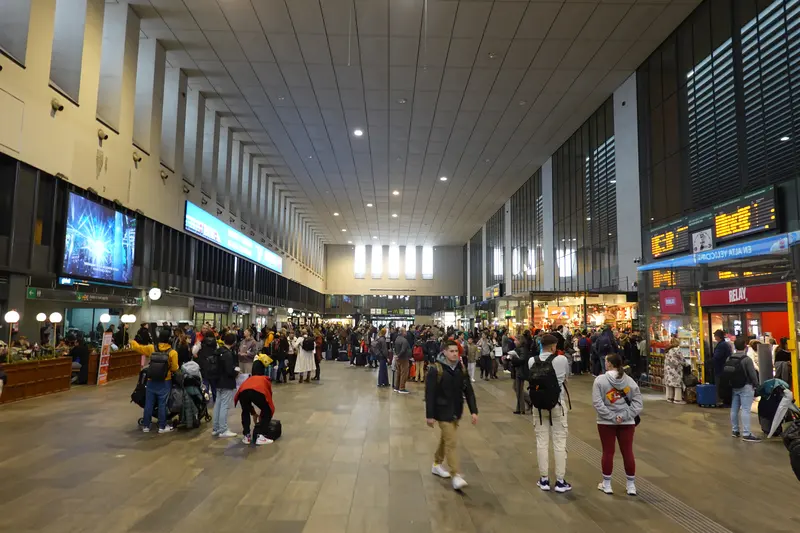
Luggage Storage in Seville
Where to drop your bags in Seville on an awkward in-between day — beside Santa Justa station, around the central sights, before a tour or after check-out — so you can spend your last hours wandering the orange-tree lanes instead of dragging a suitcase over cobbles.
Read guide
One Day in Seville Itinerary
The best one-day Seville route, hour by hour: the Real Alcázar at opening, the cathedral and Giralda, a Santa Cruz wander, Plaza de España in the soft light and a tapas evening — with a built-in afternoon heat break.
Read guideMore in Itineraries
6
2 Days in Seville Itinerary
A balanced two-day Seville plan: the UNESCO icons and Plaza de España on day one; Triana, the Setas, a market and a flamenco night on day two — built around the ticket slots and the afternoon heat.
Read guide
3 Days in Seville Itinerary
A complete three-day Seville itinerary: the UNESCO icons and Plaza de España; Triana, the Setas and flamenco; then a quieter palace, a market morning, a museum and slow golden-hour river time.
Read guide
4 Days in Seville Itinerary
A four-day Seville itinerary: the icons, Triana and flamenco, a quieter palace and a museum — then a fourth day for one Andalusian day trip, Córdoba's Mezquita above all, or a deliberate day off.
Read guide
Accessible Seville Itinerary
A realistic, romantic accessible route through Seville built on smoother surfaces, level entrances, lifts, taxis and the tram — with honest notes on cobbles, ramps, rest stops and the heat, paced so the city stays a pleasure rather than an obstacle course.
Read guide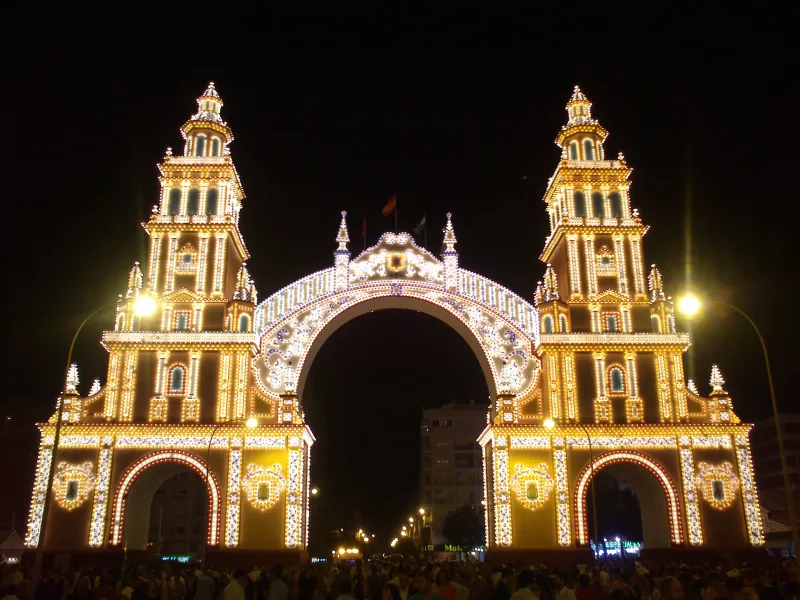
Feria de Abril Itinerary
How to plan days and nights at Seville's Feria de Abril: understanding the casetas and how to get inside one, what to wear, when the fairground comes alive, the daytime horse paseo, the rides, and how to fit ordinary sightseeing around the fair.
Read guide
Heat-Smart Summer Seville Itinerary
How to actually enjoy Seville in summer: a day built around early starts, a long midday break, pools and shade in the worst hours, and the long warm evenings the city was made for — with a sample three-day plan.
Read guide